Last updated October 31, 2026
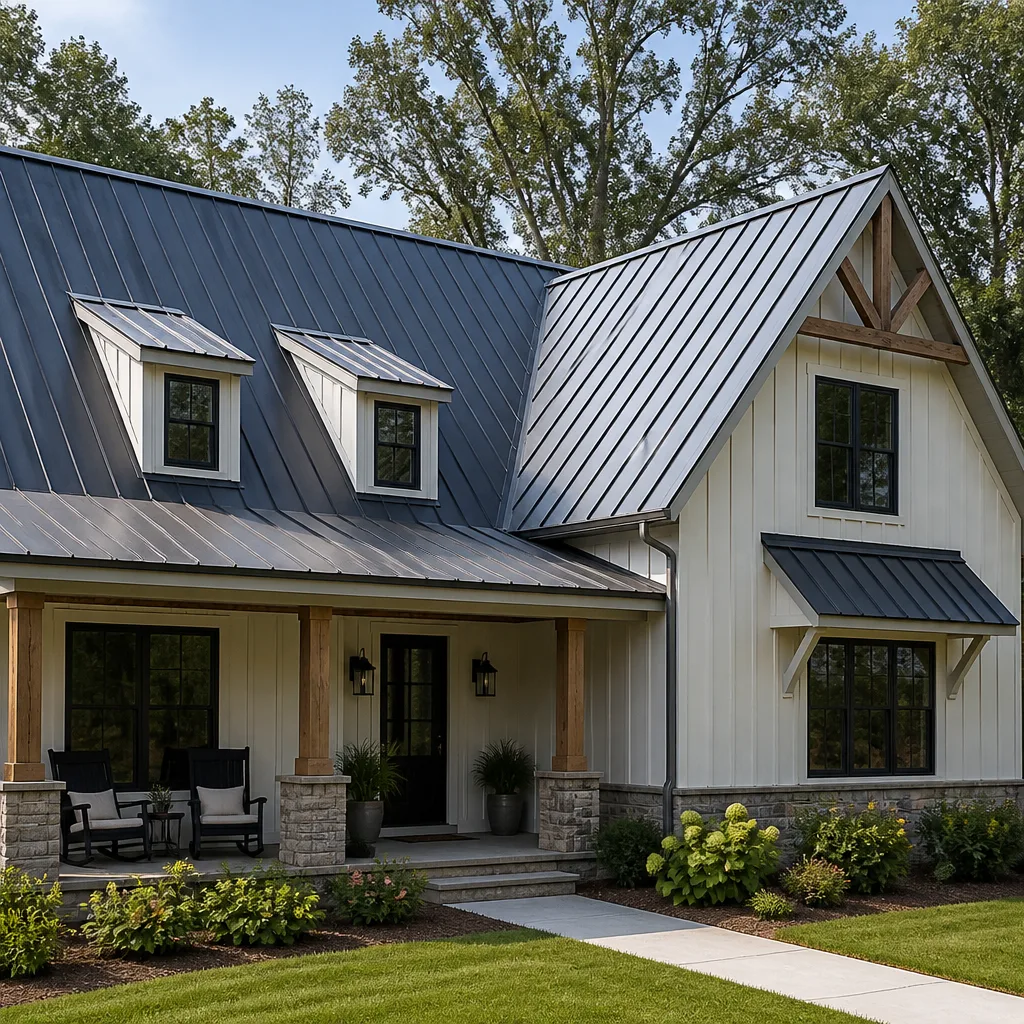 Metal roofing
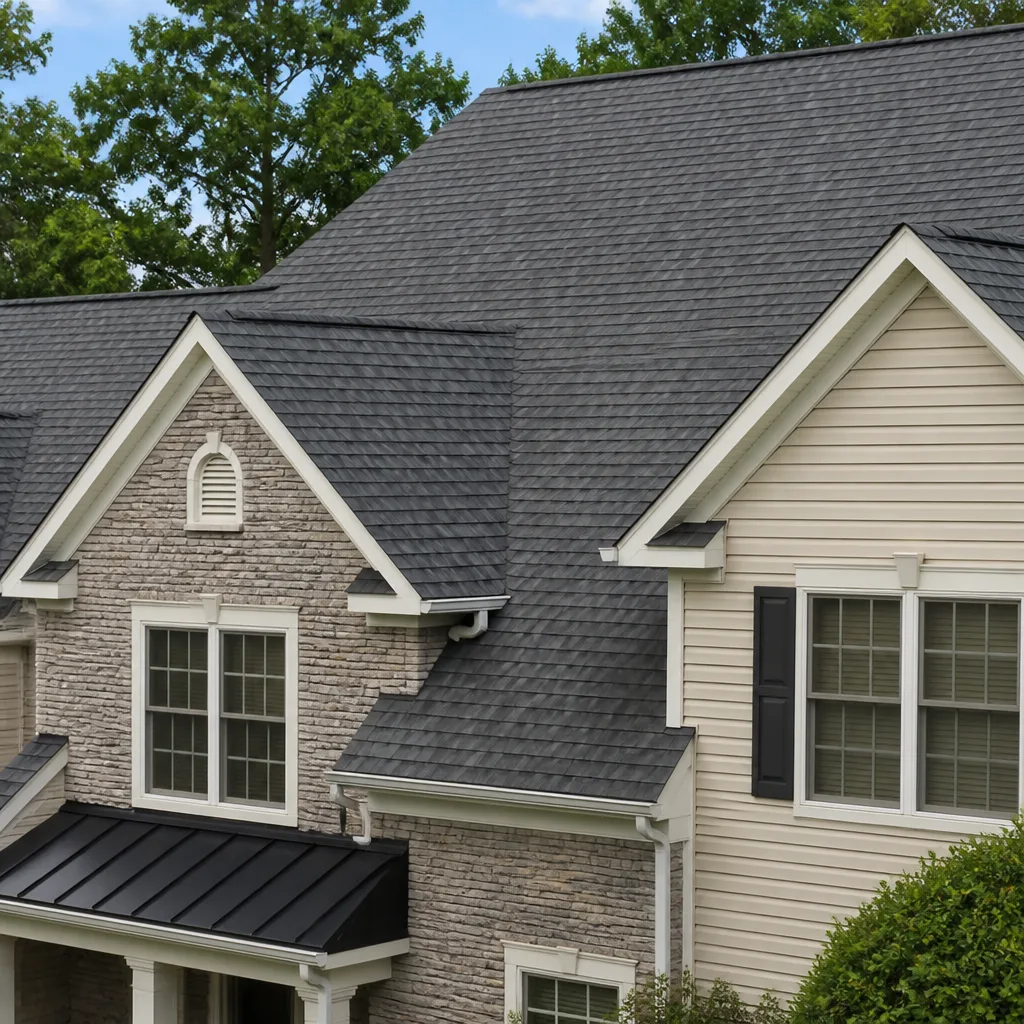 Architectural shingles
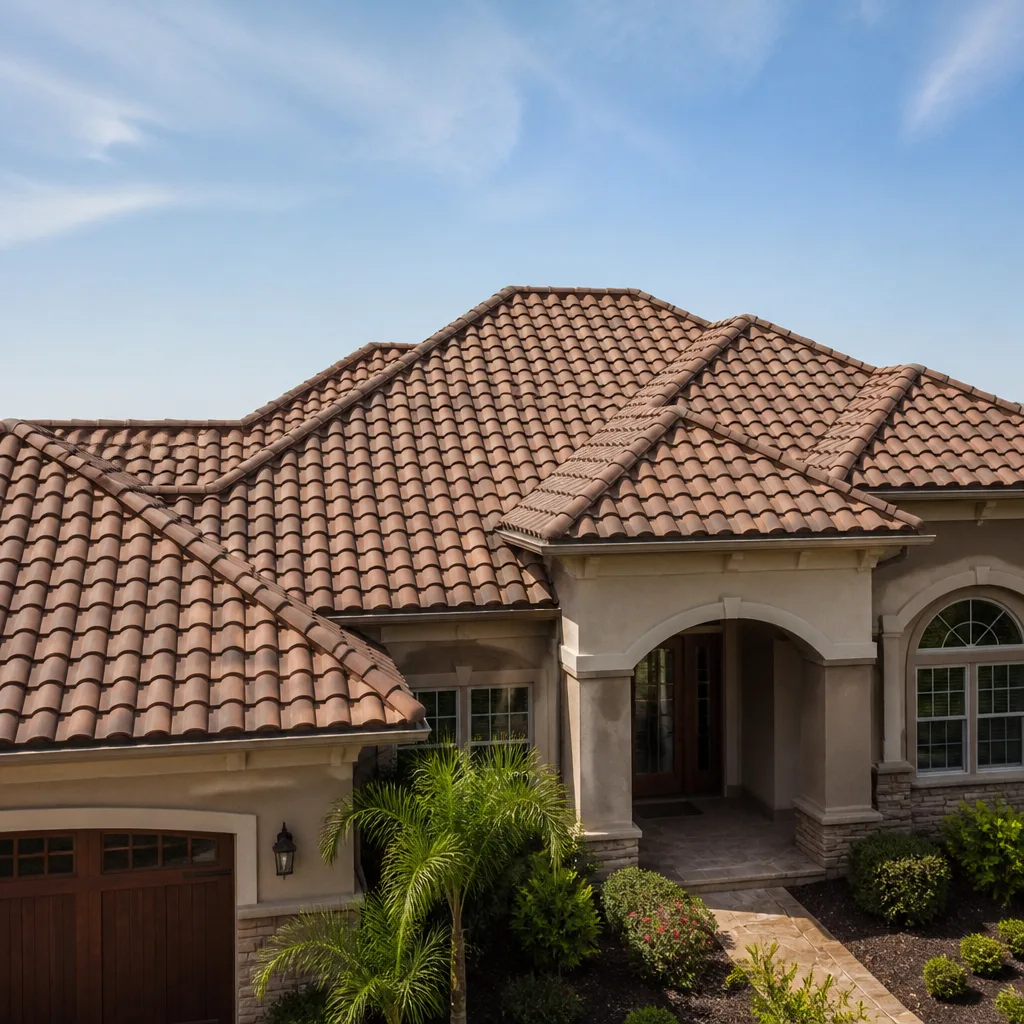 Tile roofing
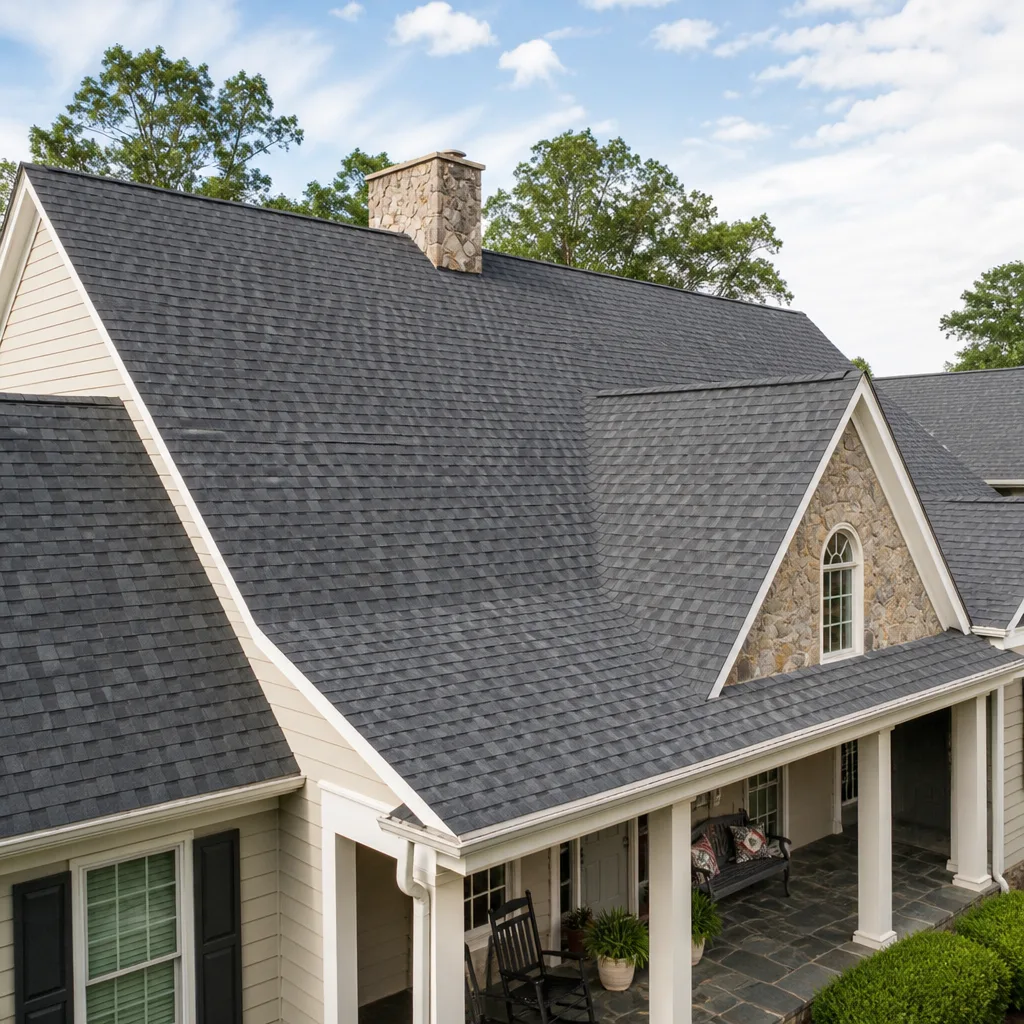 GAF
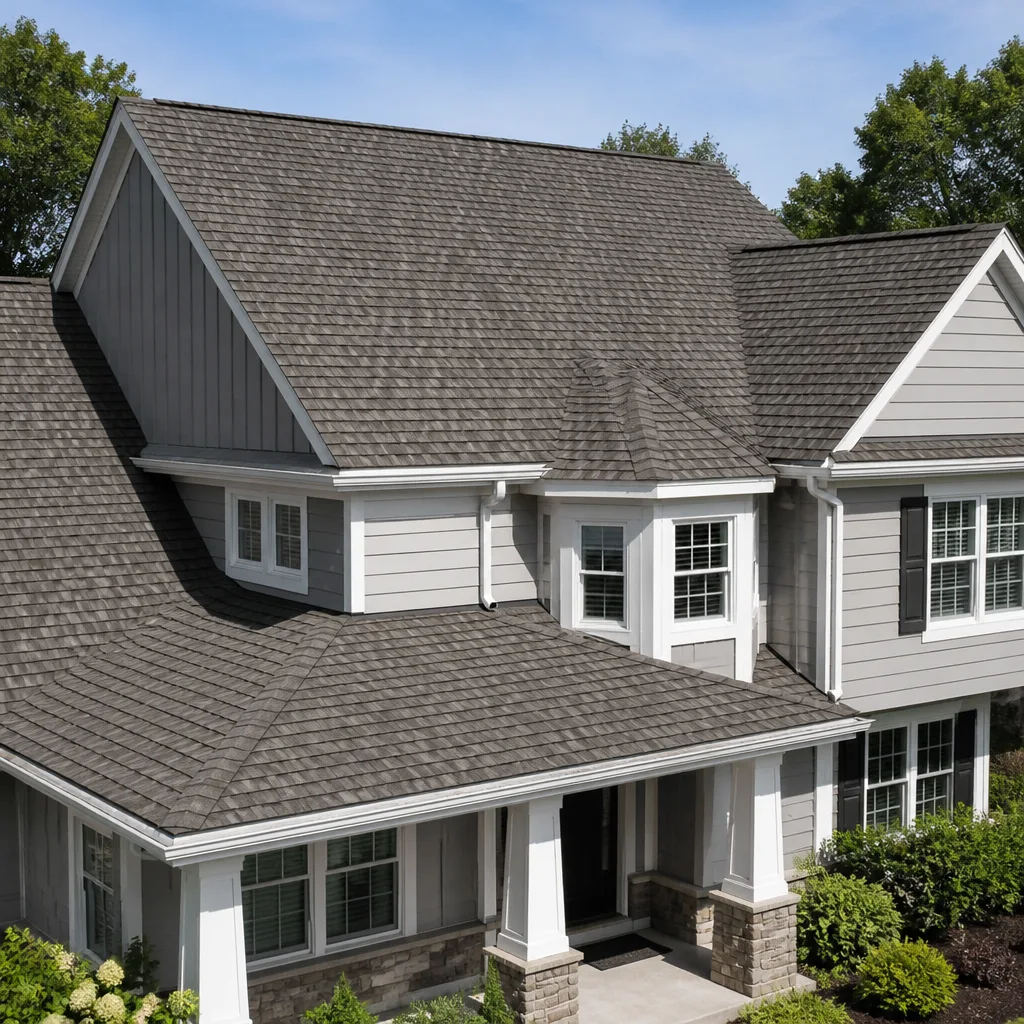 Owens Corning
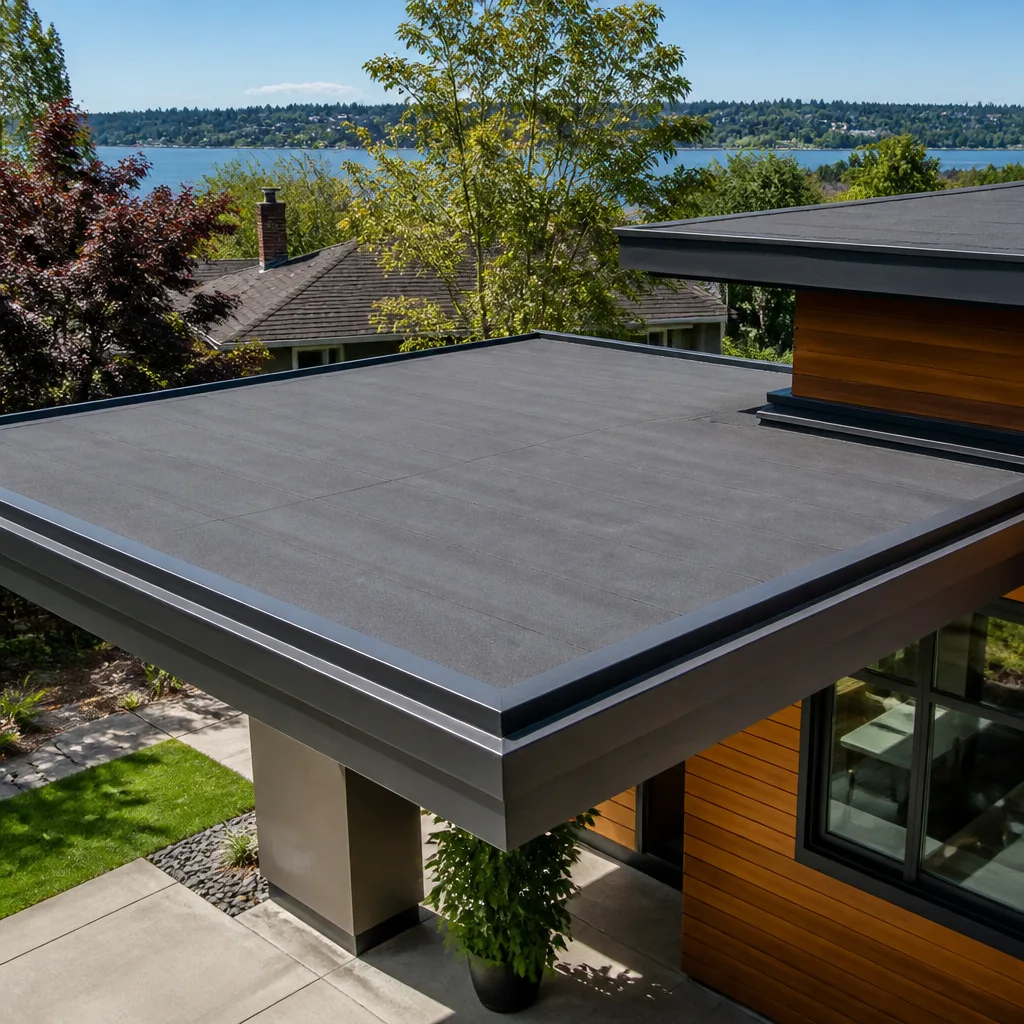 Flat & low-slope
Free roof inspection with deck photos before we talk money - GAF and Owens Corning certified installation
Roofing Emergency Preparedness Guide for Burbank Homes
During a Santa Ana wind event in Burbank, roofing contractors are typically booked 3 to 5 days out within hours of the storm passing. Homeowners without a prior contractor relationship and without emergency tarping supplies are at the mercy of whoever is still available, which is rarely who you’d choose. This guide is a pre-event preparation manual for Burbank homeowners. It covers documentation, temporary protection methods, fire-season debris management, contractor vetting, and insurance claim mechanics, so that when wind or fire or rain hits, you already know your next move. We’ve built this from years of working on Burbank roofs, and every recommendation here reflects what we actually see on the ground after each storm cycle.
Quick Answer
The most effective roofing emergency preparedness for Burbank homes involves three steps done before storm season: photograph and document your roof’s current condition, clear debris from valleys and gutters especially if you live in the VHFHSZ fire zone, and establish a relationship with a local roofing contractor so you’re not competing with every other homeowner for whoever is left after the next wind event. If damage does occur, tarp the affected area same-day using the correct anchors for your roof type, document everything before touching anything, and call your insurer before authorizing permanent repairs.
Styles & brands we work with
Table of Contents
- Burbank’s Emergency Profile: Why This Zip Code Sees Specific Roof Damage
- Pre-Season Documentation Protocol: Your Pre-Loss Baseline
- What Burbank’s VHFHSZ Designation Means for Your Roof
- Emergency Tarping Done Right: Pitched vs. Flat Roofs
- How to Vet an Emergency Roofing Contractor in Under Two Minutes
- Insurance Claim Mechanics for Weather Events: The Correct Order of Operations
- The Roof Condition Inventory: What to Note Before Anything Goes Wrong
- Building Your Burbank Roof Emergency Supply Kit
Burbank’s Emergency Profile: Why This Zip Code Sees Specific Roof Damage
Burbank sits in a narrow band of the San Fernando Valley where three things collide. First, Santa Ana winds funnel through the Verdugo Mountains and Burbank Hills at speeds that routinely strip shingles and lift roof edges. Second, the city lies partially within the Very High Fire Hazard Severity Zone, which means ember cast during wildfire events is a legitimate structural threat, not an abstraction. Third, Burbank gets most of its rain in a handful of intense winter storms rather than steady drizzle, so a roof that has been baking dry and accumulating debris for eight months suddenly has to shed water fast. Debris-clogged valleys are where we see the most avoidable damage.
What this means for homeowners is that the roof that looked fine in September can fail in November, not because the materials were bad, but because the roof was never cleared or inspected before the rain arrived. The failure point is usually a valley packed with decomposed leaf matter, or a gutter line so loaded with dry material that water backs up under the shingles and finds its way into the underlayment. In our experience, homes in the hillside neighborhoods above Glenoaks and along the Verdugo foothills see this pattern every single year. The flatland neighborhoods fare better, but they have their own issue: low-slope sections that pond water and eventually find a seam.
What Burbank Homeowners Should Know About Their Roof Type
- Composition shingle roofs: The most common roof in Burbank. Vulnerable points are ridge lines, valleys, and any shingle that has curled or lost its granule layer. Wind-driven rain enters through these weak spots.
- Flat or low-slope roofs: Common on mid-century Burbank homes and additions. Vulnerable at seams, flashing transitions, and wherever debris accumulates and traps moisture against the membrane.
- Tile roofs: Frequent in the hillside neighborhoods. Underlayment is the hidden failure point; broken or slipped tiles expose it to UV and rain, and the underlayment degrades long before the tile looks bad.
The takeaway: Burbank’s emergency profile is predictable. Wind, fire exposure, and debris-driven water intrusion. Preparing for these specific threats is far more useful than generic “storm preparedness” advice that could apply to any city in the country. And in our experience, the homeowners who fare best are the ones who prepare in August and October, not the ones who start making calls when the wind is already rattling their windows.
Related: If you want a professional baseline before storm season, our Roof Inspection in Burbank service documents your roof’s current condition and flags vulnerable points before they become emergencies.
Pre-Season Documentation Protocol: Your Pre-Loss Baseline
Here’s a counterintuitive fact about insurance claims: the homeowner who photographs their roof when it’s in good condition has a significantly easier claim than the homeowner who first photographs the roof when it’s damaged. The reason is simple. Insurance adjusters compare your “after” photos against your “before” state, and if no “before” state exists, the adjuster has to make assumptions. Those assumptions rarely favor the homeowner.
A pre-loss baseline means photographing and recording your roof and its immediate surroundings before fire season and before rainy season. You want this done when the roof is dry, accessible, and in the best condition it will be all year. The goal is not a professional inspection. The goal is documentation that proves what existed prior to a weather event.
What to Capture in Your Pre-Season Documentation
- Overall roof shots from multiple angles: From the street, from the backyard, from any second-story window that offers a view. These establish the roof’s general condition and coverage pattern.
- Close-ups of known vulnerable areas: Valleys, flashing around chimneys and skylights, pipe boots, ridge lines, and gutter runs. Even a smartphone photo at arm’s length gives an adjuster a reference point.
- Gutters and drain systems: Show that they were clear and functional before the event. This matters because insurers look for maintenance-related denial angles.
- Interior ceiling shots: Photograph ceilings below the roof, especially in rooms with vaulted ceilings or known past issues. These establish the interior was stain-free before the storm.
- Date-stamp everything: Use a camera or phone that embeds date and time in the file metadata. If that’s not automatic, take a photo of that day’s newspaper with the roof in frame, or just email the photos to yourself the same day to establish a timestamp.
Store these photos in at least two places: a cloud folder you can access from anywhere, and a local backup like an external drive or printed set. When an adjuster asks when the roof was last in good condition, you will have a documented answer. This single practice removes weeks of back-and-forth from a typical weather event claim.
If doing this yourself means getting on a ladder, don’t. We regularly photograph roofs from the ground or from windows for documentation purposes. For anything beyond a ground-level visual check, that’s what we do in a Roof Inspection in Burbank. The documentation is a homeowner task. The physical inspection is not.
What Burbank’s VHFHSZ Designation Means for Your Roof
Burbank’s hillside neighborhoods fall within California’s Very High Fire Hazard Severity Zone designation, often abbreviated as VHFHSZ. The designation triggers specific building code requirements for new construction and significant renovations, but for the existing-homeowner, the practical reality is simpler: during a wildfire event, burning embers travel on the wind and land on roofs. An ember that lands on clean, intact roofing material may smolder and die. An ember that lands in a valley packed with dry leaves, or in a gutter full of pine needles and eucalyptus bark, can ignite that debris and create a roof fire even when the roof itself is fire-resistant.
This is the single most misunderstood aspect of the VHFHSZ for homeowners. They assume that if their roof covering is rated Class A or Class B, they’re fire-safe. The covering is only one variable. The debris load on the roof is the other variable, and it’s one that changes every time the wind blows or a tree drops leaves.
The Debris Problem, Specifically
Burbank’s urban forest is heavy with eucalyptus, California oak, pine, and jacaranda. These trees shed material year-round, but the accumulation peaks in late summer and fall, which coincides perfectly with peak fire season. Eucalyptus bark is particularly problematic: it’s oily, it curls in a way that traps against roof features, and it burns hot. When we inspect roofs in the Burbank hills in September and October, we routinely find gutters that are more debris than gutter, and valleys buried under a season’s worth of leaf litter. The hillside homes above Kenneth Road, the streets around Brace Canyon Park, and the Verdugo foothill neighborhoods deal with this constantly.
Pre-Event Cleaning as Loss Prevention
Clearing your roof and gutters before fire season is a documented loss-prevention measure. In the context of insurance and fire agencies, this practice falls under “defensible space” and “home hardening” doctrine. Ember cast cannot be eliminated, but an ember landing on a clean roof has vastly less fuel to work with than an ember landing on a debris-loaded roof.
The practical routine for Burbank homeowners is twice-yearly clearing: once in late spring after the hillside grasses dry out, and once in late September or early October before the Santa Ana season peaks. If you’re not comfortable doing this yourself, a professional inspection and cleaning is a reasonable seasonal expense. At minimum, a ground-level visual check of your gutters every two weeks during fire season keeps you aware of what’s accumulating overhead.
Related: Marquis Roof Repair home offers seasonal inspection and debris-clearing guidance as part of our commitment to keeping Burbank roofs storm-ready.
Emergency Tarping Done Right: Pitched vs. Flat Roofs
The single most useful skill a Burbank homeowner can learn before storm season is how to tarp a damaged roof section correctly. A properly anchored tarp can prevent thousands of dollars in secondary water damage and buy you the three to five days it takes to get a contractor on-site after a major storm. A poorly anchored tarp becomes a sail: it tears off, exposes the damage, and in the worst cases, damages additional roof areas on its way down.
The method differs significantly between pitched roofs and flat or low-slope roofs. They require different tarp materials, different anchor strategies, and different levels of caution. What follows is what we’ve learned from post-event emergency work across Burbank, where we’ve seen every tarping mistake possible.
Pitched Roof Tarping
For a shingle or tile roof with a slope, the goal is to cover the damaged area and extend the tarp up and over the ridge line when possible. Tucking a tarp under shingles and overlapping seams keeps water flowing over the tarp rather than under it. The anchor points should be along the top edge and corners, using wood strips or sandbags rather than nails through the tarp itself.
Running nails through a tarp creates puncture points that tear under wind load. Instead, wrap the tarp edge around a length of 1×2 lumber, then secure the lumber to the roof surface with screws placed in the gaps between shingles rather than through the shingle face. This is the method that survives a second Santa Ana event.
Flat or Low-Slope Roof Tarping
Flat roofs in Burbank are often modified bitumen, built-up roofing, or single-ply membrane systems. Puncturing these with anchors creates new leak points, so the anchoring strategy has to be weight-based rather than penetration-based. Sandbags, tires, or filled sealant buckets placed around the tarp perimeter work, but they need to be heavy enough to resist uplift. A Santa Ana gust can lift a loosely weighted tarp off a flat roof in seconds.
Overlap the tarp at least three feet beyond the damaged area in every direction. On a flat roof, water pools, so the tarp has to be drum-tight across the affected section. Any wrinkle becomes a pond, and a pond becomes a leak. If the damage is substantial or if getting on the roof is not safe, stop and call a professional who has the equipment and the training to do this without turning a repair into an injury.
Safety Note
We’re going to be direct: working on a roof is dangerous. Steep slopes, wet surfaces, and wind all compound the risk. If you have any hesitation about getting onto your roof, don’t. Tarping is a temporary measure, not a permanent repair, and no tarp is worth a fall. Call us at (866) 705-2978 and we’ll assess your situation and advise on the safest next step.
For permanent repairs after a weather event, our Roof Repair in Burbank service addresses the underlying damage rather than just covering it.
How to Vet an Emergency Roofing Contractor in Under Two Minutes
After a major wind or rain event in Burbank, out-of-state storm chasers appear within days. They canvass neighborhoods, leave flyers, and promise immediate repairs at suspiciously low prices. Some do legitimate work. Many don’t. The homeowner who is emotionally rattled and looking at a growing ceiling stain is exactly the customer these operations target.
The good news is that filtering out storm-chasing operations from legitimate local contractors doesn’t require deep research. It requires asking the right questions and paying attention to the answers. Here are the three questions that do the heavy lifting:
The Three Questions
- “Are you licensed in California, and can I see your license number?” A legitimate contractor provides this without hesitation. A storm chaser hesitates, changes the subject, or explains why licensing isn’t required. In California, roofing contractors must hold a C-39 license. You can verify any number on the CSLB website in under a minute.
- “Who pulls the permit for this repair, and what’s the permit timeline?” In Burbank, significant roof repairs and any replacement require a city building permit. A legitimate contractor knows the Burbank permitting process and will explain it clearly. A storm chaser either doesn’t know what permits are required or encourages you to skip the permit process altogether.
- “Can I see your Burbank references from before this storm?” Any contractor can collect references from this month’s emergency work. The question is whether they had a local presence before the event. A contractor with legitimate Burbank work history has references that predate the storm. A storm chaser has only recent, out-of-area references.
Beyond the questions, trust what you see. A contractor’s trucks carry their name, and you can check whether those trucks have California plates. Their address, when you search it, should resolve to a physical location, not a P.O. box in another state. And their price should be in line with the local market, not dramatically lower. Emergency repair pricing in Burbank reflects local factors: hillside access, Burbank permit requirements, and material availability across the major manufacturers. A price dramatically below local norms is a red flag, not a bargain.
Related: For an introduction to how we approach Burbank roof work, see our Roof Repair in Burbank page, which covers our diagnostic process and repair philosophy.
Insurance Claim Mechanics for Weather Events: The Correct Order of Operations
Insurance claims for roof damage fail or reduce in value most often because the homeowner acted in the wrong order. The emotional impulse is to fix the roof immediately, pay out of pocket, and then submit a claim. That sequence can void the claim or reduce what the insurer is willing to cover. The correct order of operations is documented, mitigated, notified, and authorized.
The Correct Order
- Document before touching anything. Photograph the damage from every angle you can safely reach. Capture the surrounding area, the roof surface, the interior ceiling, and any items damaged by water intrusion. Your pre-season documentation from earlier in this guide is your baseline: the adjuster will compare these new photos against that baseline.
- Mitigate only what is necessary to prevent further damage. This is where emergency tarping comes in. Covering a breach to prevent ongoing water intrusion is a legitimate mitigation expense, and most policies cover reasonable mitigation. If you’re unsure whether to tarp, ask yourself: will water enter the home if I don’t? If yes, mitigate. If no, wait.
- Notify your insurer before authorizing permanent repairs. This is the step homeowners skip. Calling your insurer first does two things: it documents the event in their system, and it triggers the adjuster process. If you authorize permanent repairs before the insurer has documented the loss, you may be repairing damage they never had a chance to inspect, which weakens your claim.
- Authorize permanent repairs once the insurer has inspected or waived inspection. Most insurers understand that emergency repairs sometimes need to happen before an adjuster can visit. If that’s the case, document everything, save all materials, and keep the damaged sections for the adjuster’s review. The torn shingle or cracked flashing you save may be the evidence that supports your claim.
We see too many Burbank homeowners eat repair costs that their policies would have covered because they called the contractor first and the insurer second. The contractor won’t mind being told to wait. A professional roofer knows how the claims process works and will provide documentation, photos, and a detailed scope of work that supports your claim. A storm chaser pushes you to sign and start immediately because they know a faster claim is a weaker claim.
Related: If your roof has sustained damage that may require full replacement, visit our Roof Replacement in Burbank page to understand what a claim-supported replacement involves.
The Roof Condition Inventory: What to Note Before Anything Goes Wrong
Most Burbank homeowners could not tell you the age of their roof, the brand of shingles on it, or the condition of their flashing without climbing a ladder. That’s fine until an emergency happens, and suddenly you need to describe your roof to an insurance agent over the phone or compare repair options from three different contractors. The Roof Condition Inventory solves this problem in advance.
Think of it as the one-page record of what’s on your house right now, before the wind, before the fire, before the rain. You compile it once, update it when something changes, and it lives in the same place as your insurance policy and your pre-season photos.
What Goes in the Inventory
- Roof age: When was it installed or last replaced? If you bought the home without this information, check the disclosure documents from your purchase or look for a permit record with the Burbank Building Department.
- Material type: Composition shingle, tile, modified bitumen, built-up, single-ply membrane. If you know the brand of the shingle or membrane, note that too. Burbank roofs run the full range, and knowing whether you have a GAF shingle or a CertainTeed shingle matters when matching repairs later.
- Known weak points: Every roof has them. A valley that has always collected debris. A flashing joint that dripped once three years ago. A section where the granules are wearing thin. Write them down before you forget.
- Last professional inspection date: If a roofer has looked at the roof in the past three years, note who, when, and what they found. This matters for warranty claims and insurance disputes.
- Previous repairs: What was fixed, when, and by whom. A repair history tells you which areas are likely to fail again in the next event.
This inventory is not a replacement for a professional inspection, but it’s a homeowner-level document that makes you a better insurance customer and a better contracting client. When you call us after a storm and we ask about your roof, you’ll have answers instead of guesses.
Building Your Burbank Roof Emergency Supply Kit
The time to buy a tarp is not the morning after a storm strips the shingles off your roof. In the post-event scramble across Burbank, tarps disappear from hardware store shelves within hours. The homeowners who pull a pre-assembled emergency kit from their garage are the ones who get protected same-day. Everyone else waits for the next shipment.
A Burbank roof emergency supply kit costs under $200 and takes an afternoon to assemble. It’s insurance against both damage and price-gouging.
What to Include
- Heavy-duty tarp, at least 20×30 feet: Larger than you think you need. The extra material allows for overlap over the ridge line or far beyond the damaged area.
- 2-3 lengths of 1×2 lumber, 6 to 8 feet each: Used to roll tarp edges and create anchor points on pitched roofs.
- Roofing screws or exterior-grade screws, 2-inch minimum: For securing the lumber anchor strips. If you have a flat roof, skip the screws and prioritize weight anchors.
- Sandbags or filled sealant buckets, 4-6 units: Weight anchors for flat roofs. Empty sandbags are cheap and store flat; fill them when an event is forecast.
- Rope or ratchet straps: For additional securement in high-wind events. Do not use thin twine or bungee cords; they will not hold a wind-loaded tarp.
- Utility knife and scissors: For trimming tarp edges and cutting anchor lines.
- Disposable camera or spare phone battery: Your phone is your documentation tool. A dead battery in an emergency is a preventable failure.
- Thick work gloves and a headlamp: Handling tarp edges and roofing material in the dark is a recipe for cut hands and dropped tools.
Store this kit somewhere accessible: garage shelf, shed, utility closet. Not buried behind holiday decorations. When the Santa Ana warnings start, you can pull it out, assess your roof from the ground, and make a plan without leaving the house.
A Note on Material Selection After a Storm
When permanent repairs begin, you’ll face a material choice. Burbank roofs perform differently depending on what’s on them, and the right material depends on your roof’s slope, your home’s exposure, and your budget. We work with seven major manufacturers, including Owens Corning, IKO, GAF, and CertainTeed, which means we’re not committed to pushing one brand. We pick the material that suits your roof and your budget, not the one that happens to be in stock that week. Seven manufacturer lines, one point of contact.
Common Mistakes to Avoid
- Waiting until the storm hits to find a contractor. By the time the wind stops, every reputable Burbank roofer is booked. If you’ve never spoken to a roofer before the emergency, you’re choosing from whoever has an open slot, not whoever does the best work.
- Documenting after the fact instead of before. Post-damage photos without pre-damage baseline photos leave the adjuster guessing. Your strongest evidence is the photo you took in September, not the one you took in November.
- Ignoring gutter and valley debris during fire season. A Class A roof covering doesn’t matter if a burning ember lands in a gutter packed with dry eucalyptus bark. Debris clearing is the most overlooked fire-preparedness step on Burbank hillside homes.
- Nailing a tarp directly to the roof with no anchor strips. A tarp with nails through it becomes a sail in the next wind event and tears away in hours. Anchor strips distribute the load and survive a second wind cycle.
- Skipping the insurer call before starting permanent repairs. The contractor can wait. The claim cannot be retroactively filed with the same strength if the insurer never saw the damage. Call the insurer first, then the roofer.
- Choosing the cheapest emergency quote as a default. A price far below the local market from an out-of-state contractor usually means you’re paying for work that won’t last. In roofing, the emergency discount is sometimes a deferred cost.
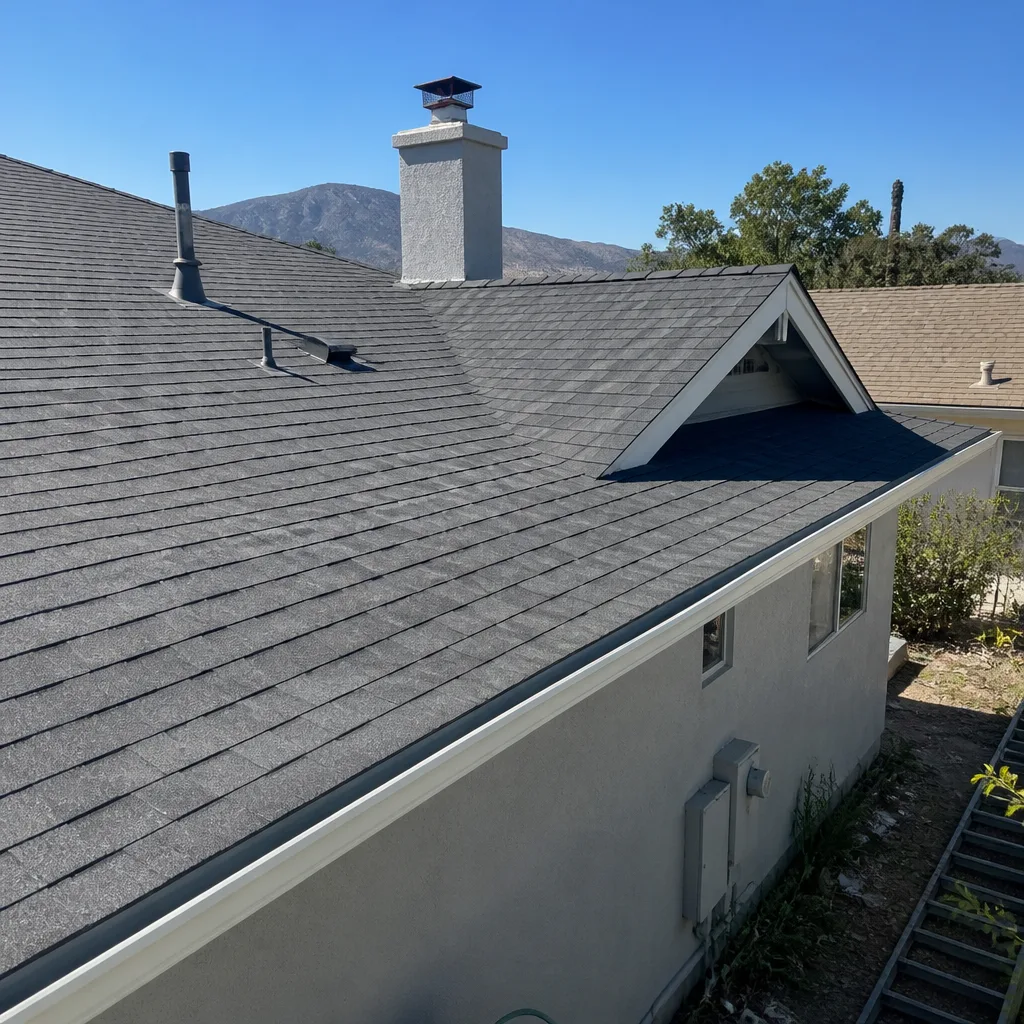
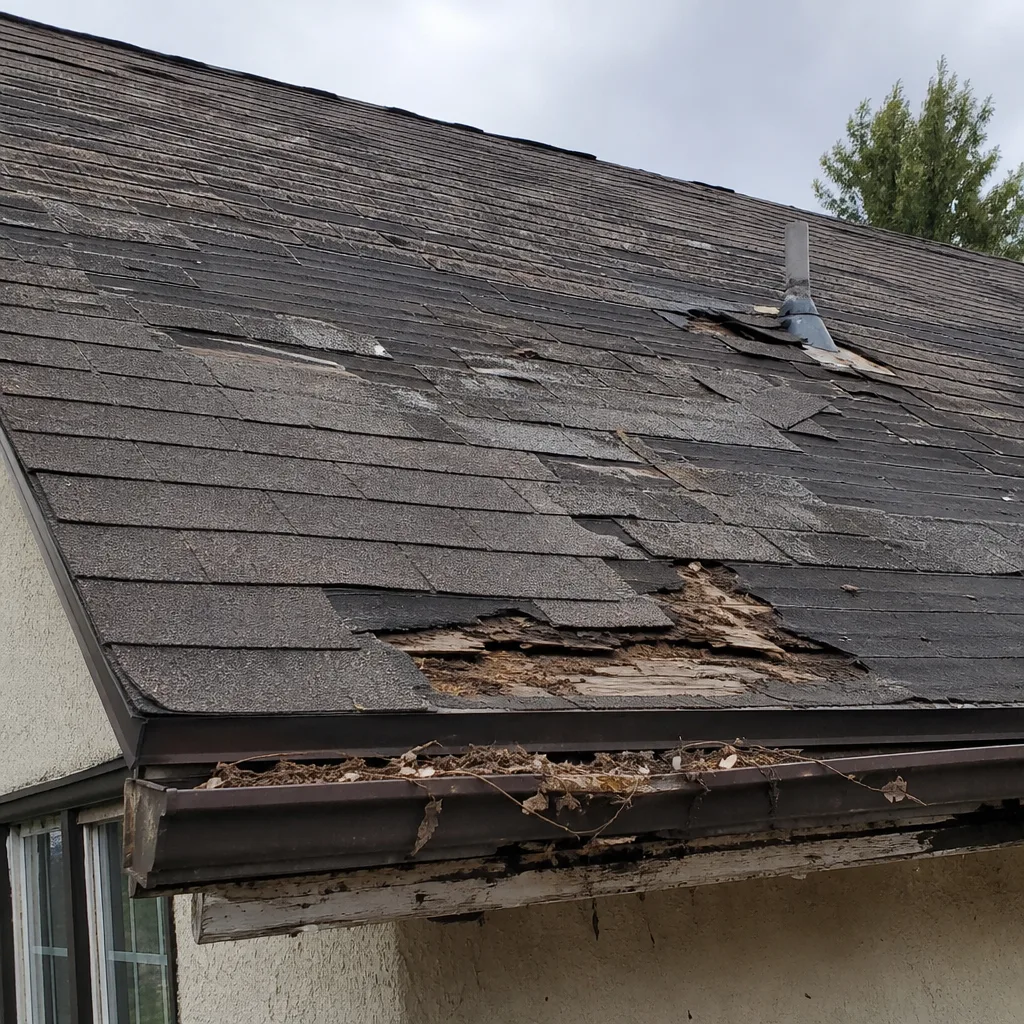
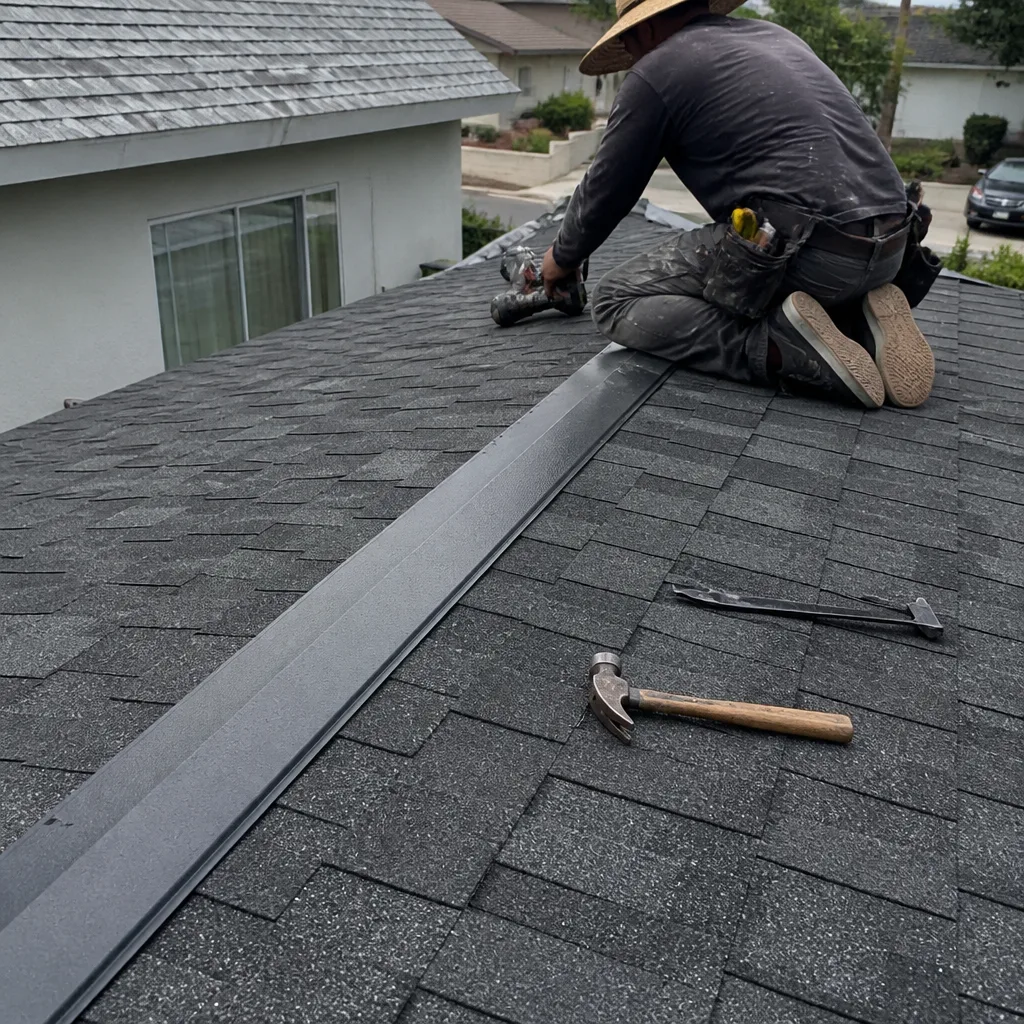
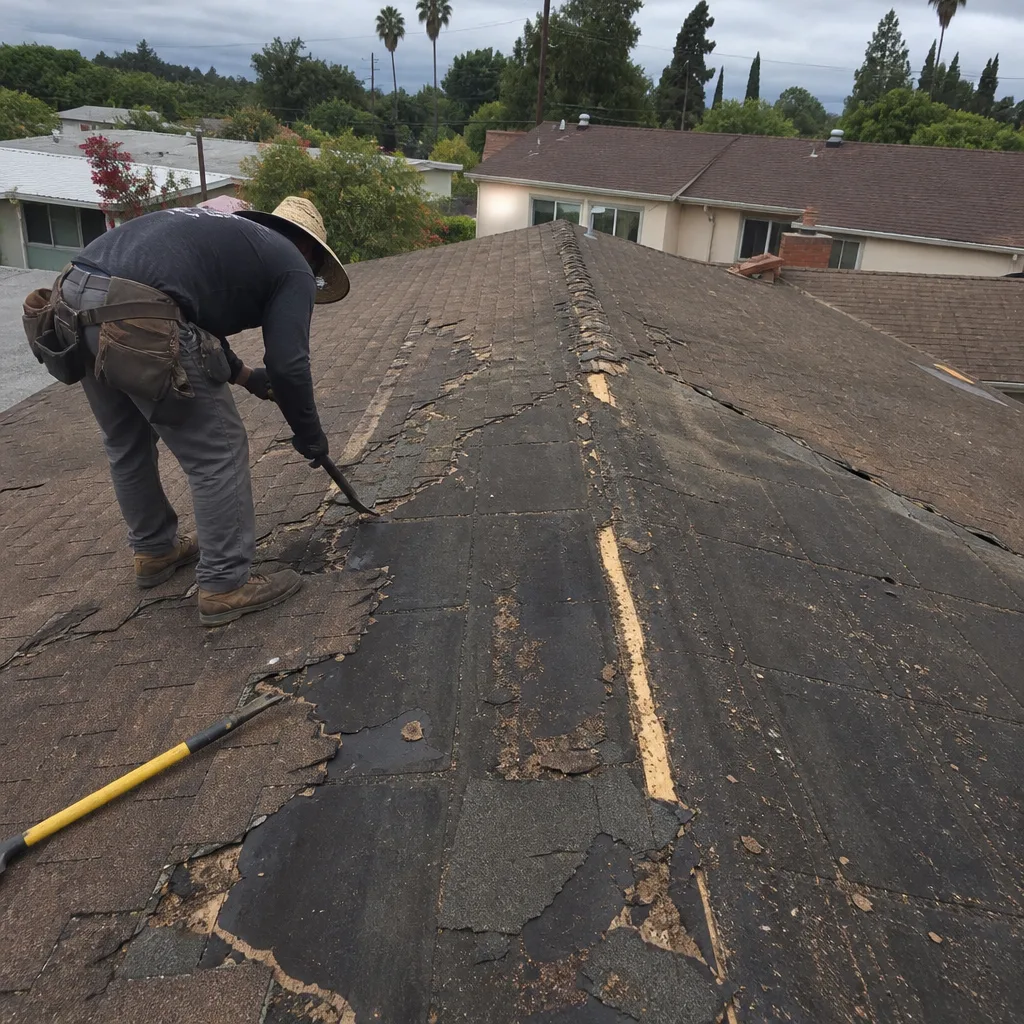
See the difference
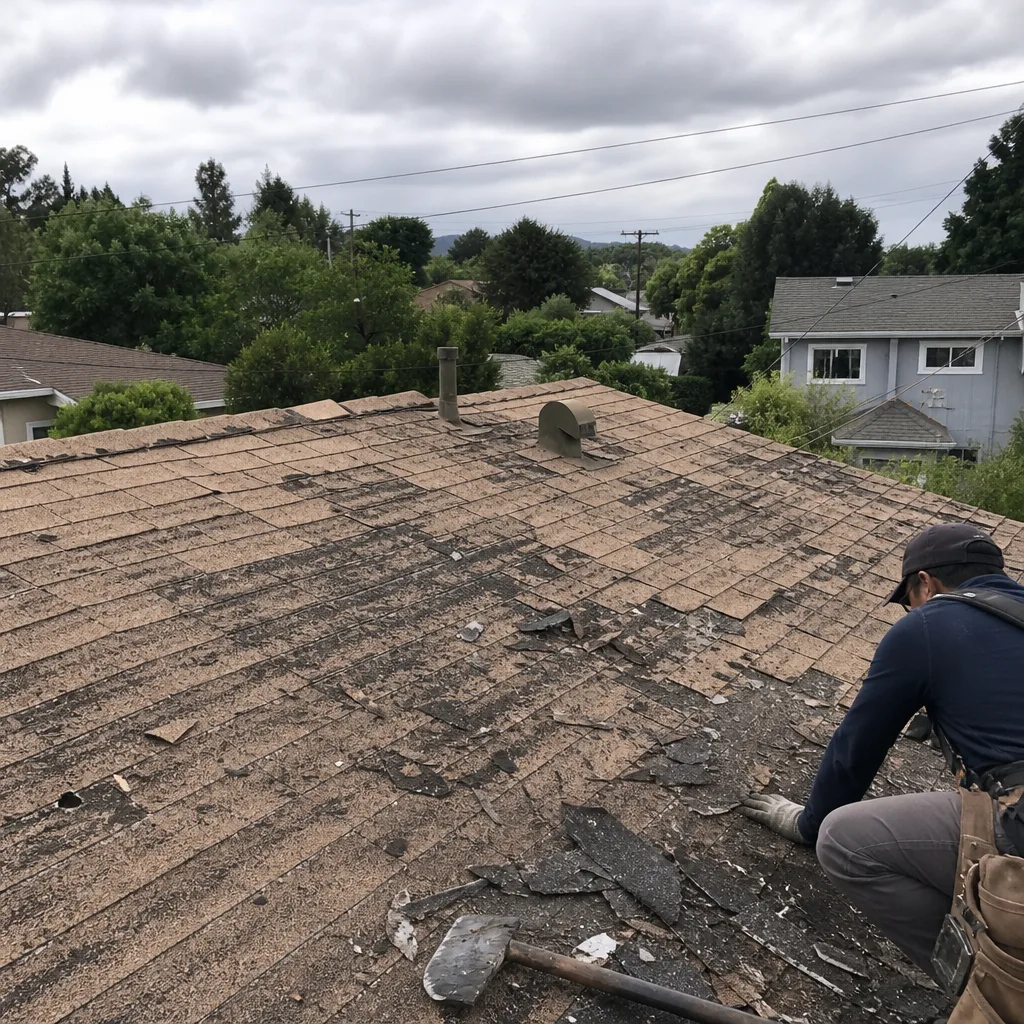 Before
 After
 Before
 After
 Before
 After
When to Call a Professional
Some situations are not homeowner-level problems. If you see daylight through your roof deck from inside the attic, you need a professional. If water is entering multiple rooms, you need a professional. If the damage involves the structural decking or trusses, not just the shingle layer, you need a professional. If the roof is steep, wet, or wind-loaded and getting on it feels unsafe, that feeling is correct. Marquis Roof Repair offers free estimates in Burbank. Call (866) 705-2978 and we’ll assess the damage, explain your options in plain English, and walk you through the insurance process step by step. No pressure, no upsell. We investigate before we recommend.
Frequently Asked Questions
Emergency tarping in Burbank typically runs between $300 and $800 depending on roof type, access, and extent of the affected area. Permanent repairs vary widely based on materials and scope, with minor shingle repairs starting around $400 and full replacements ranging from $12,000 to $30,000 or more for larger or steeper homes. Call (866) 705-2978 for a free estimate based on your specific situation.
Yes. The Burbank Building and Safety Division requires permits for roof replacements and most significant repairs. A legitimate contractor will know what’s required and will pull the permit as part of the job. Working without a required permit creates title problems when you sell, and it can void manufacturer warranties. We handle permits as a standard part of our work.
First, contain the water inside: move furniture, place buckets, and protect floors. Then, photograph the visible damage. If water is actively entering, call us at (866) 705-2978 and we’ll advise whether emergency tarping is necessary and safe. Do not get onto the roof during an active storm. Document first, mitigate second, and call your insurer before authorizing permanent repairs.
Most homeowners policies cover sudden weather events like wind and rain damage, but coverage depends on your specific policy terms and whether the damage was the result of a covered peril versus neglect. Pre-existing wear, missing shingles that predate the storm, and long-term leaks are typically not covered. This is why pre-season documentation matters: it establishes that the damage was sudden, not gradual. Call us if you need help preparing a claim, and we’ll document what the adjuster needs to see.
For most Burbank homes, an annual inspection is appropriate, with a second check after any major wind event of 50+ miles per hour. Homes in the VHFHSZ hillside areas benefit from a pre-fire-season inspection focused on debris clearing and ember entry points. If your roof is older than 12 years and has never been professionally inspected, schedule one now. Our Roof Inspection in Burbank is a flat-fee service that documents everything you need for your pre-season baseline.
For a single-story home with a low-slope roof and the damage clearly visible from a ladder, a homeowner with proper materials and good judgment can tarp a roof. For steep pitch, two-story access, any roof type that requires penetration anchors, or any situation where you feel uncertain, call us. No tarp is worth a fall, and a poorly anchored tarp that fails in the next wind storm leaves you worse off than before.
The Bottom Line
Burbank’s roofing emergencies follow a pattern: Santa Ana wind events, fire-season ember cast, and intense winter rain. Homeowners who navigate these events with the least stress and the lowest cost are the ones who prepared beforehand. They photographed their roof before the damage. They cleared their valleys and gutters before fire season. They had tarps and anchor materials ready in the garage. And they knew a contractor before the storm hit. None of this is complicated, and none of it is expensive. It’s the difference between being a prepared homeowner with options and a panicked homeowner at the mercy of whoever picks up the phone.
If you’re in Burbank and want to sit down with someone who can assess your roof, document its condition, and help you build a plan before the next wind event, call Marquis Roof Repair at (866) 705-2978. From first inspection to final shingle, we’re built to the Marquis standard.
Written by the team at Marquis Roof Repair, serving Burbank since 2014.