
Last updated October 31, 2026
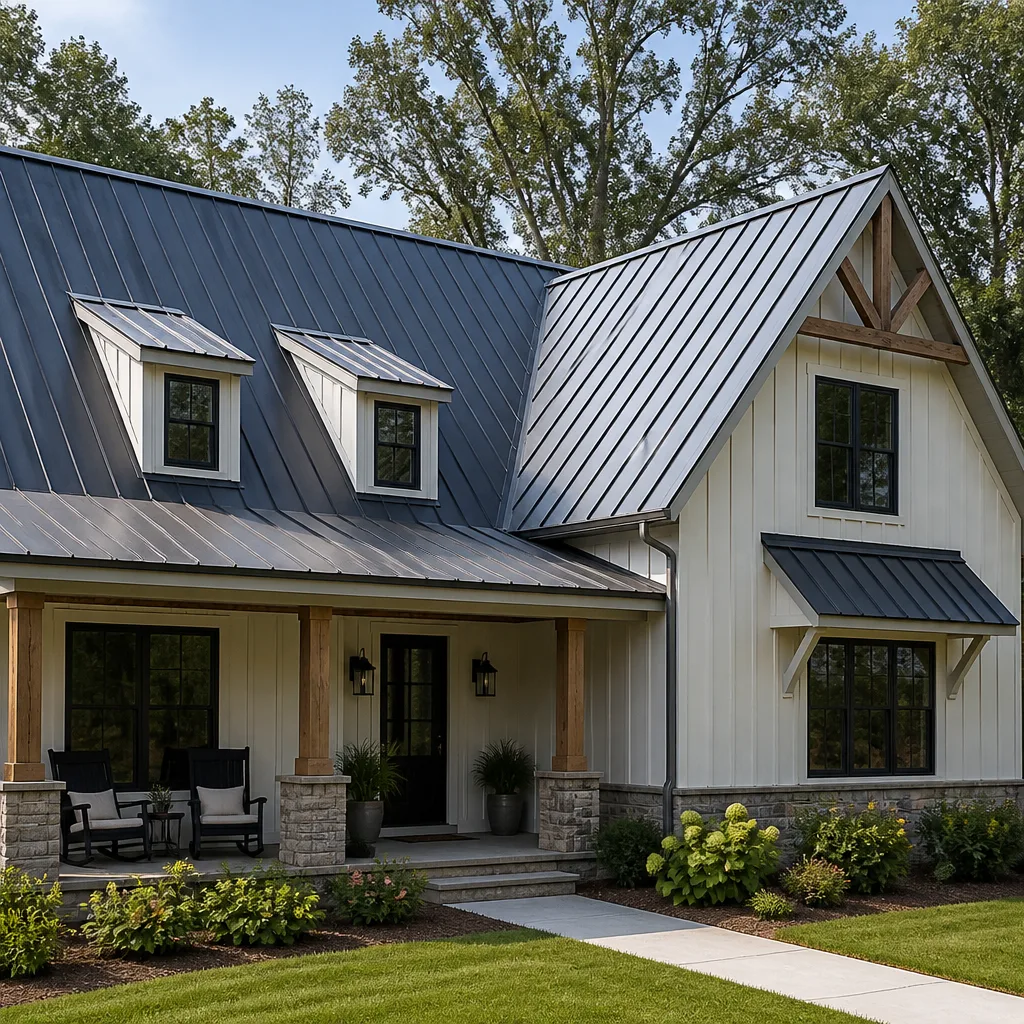 Metal roofing
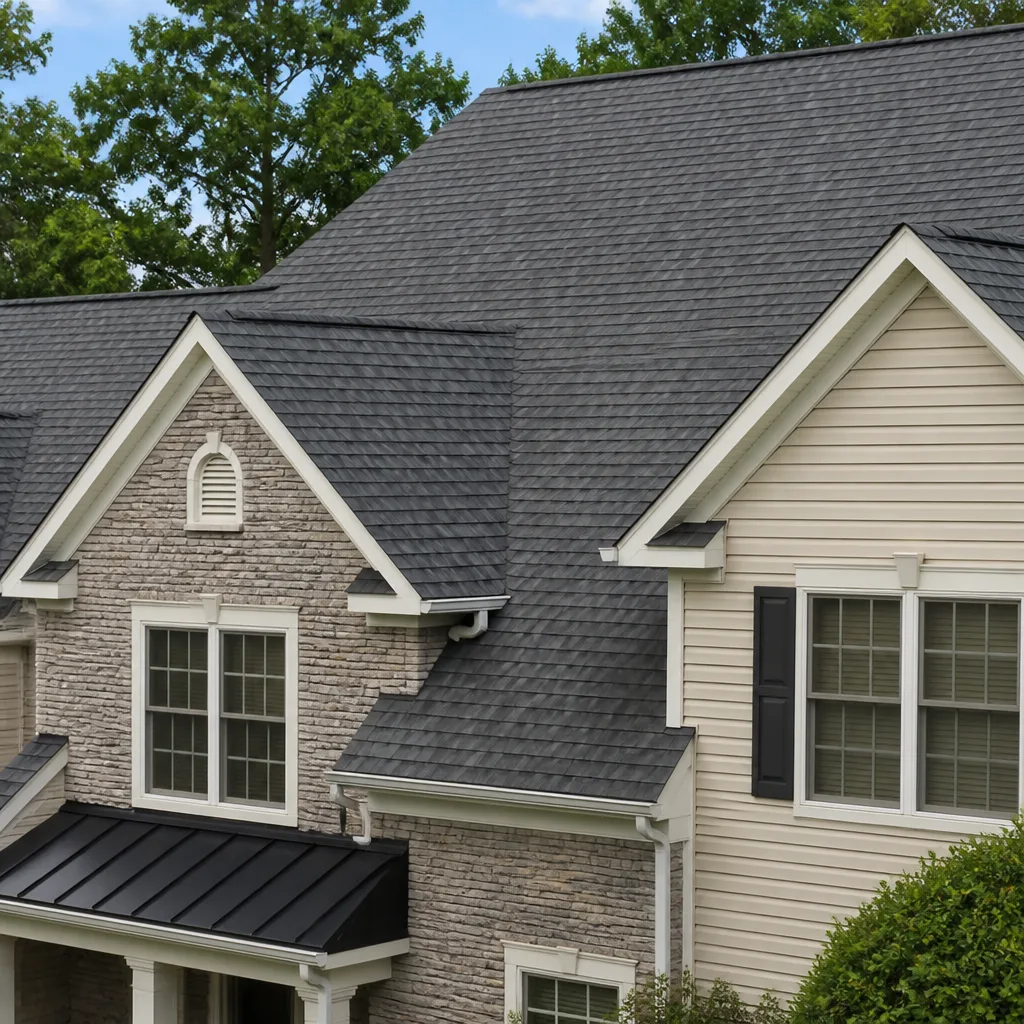 Architectural shingles
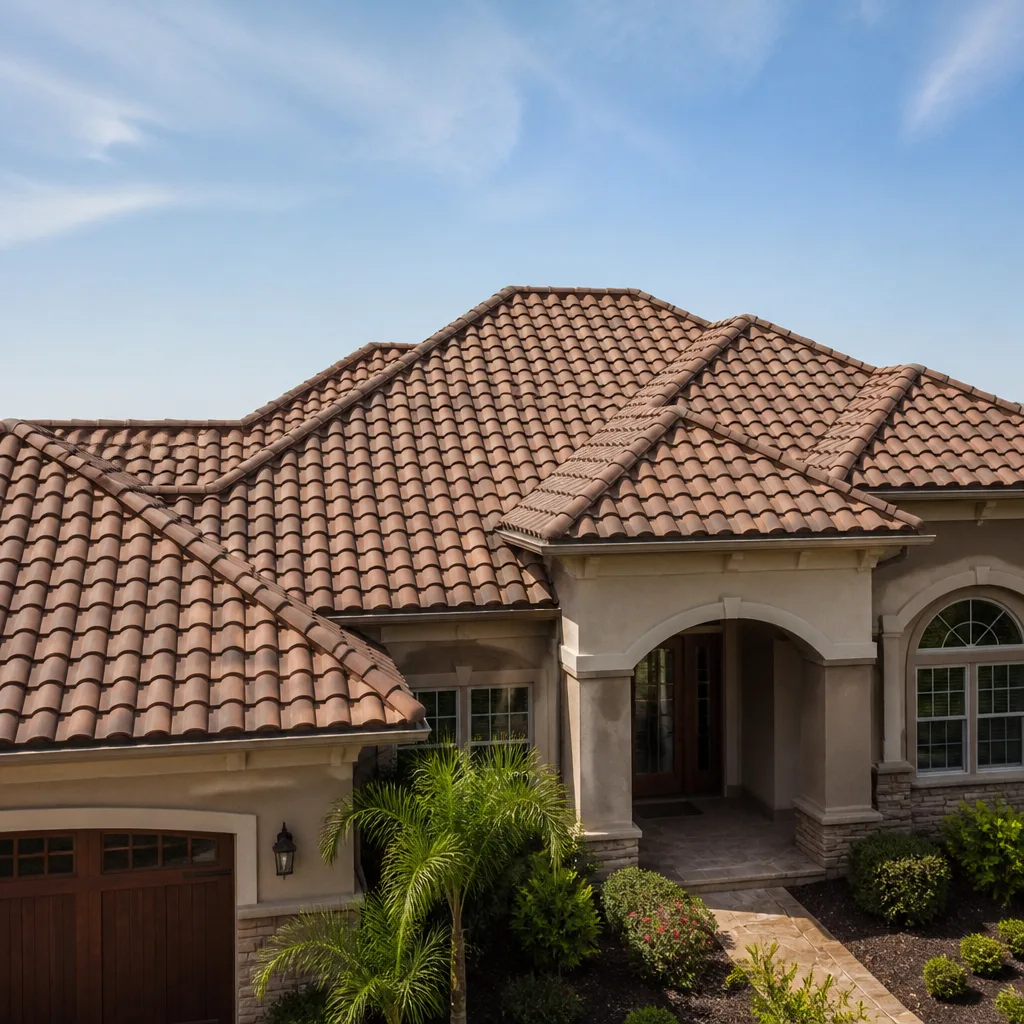 Tile roofing
 GAF
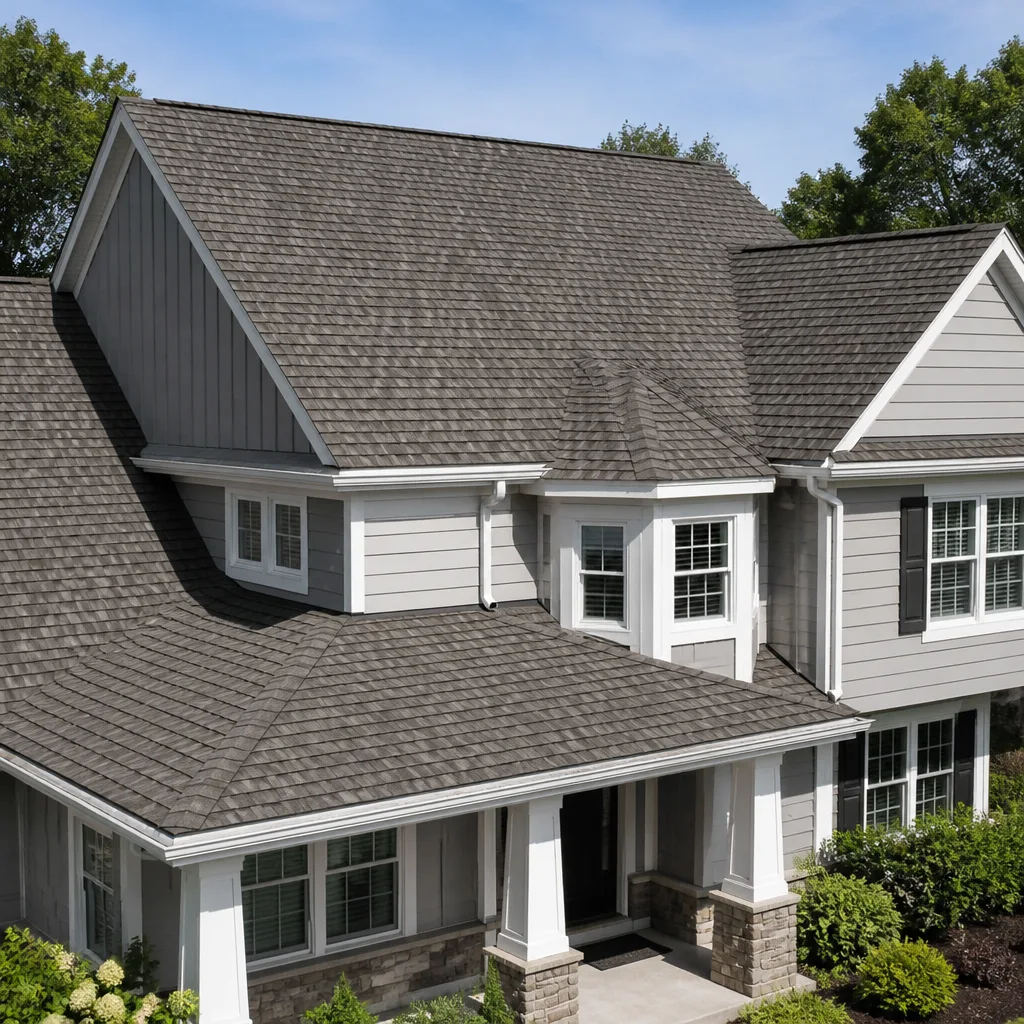 Owens Corning
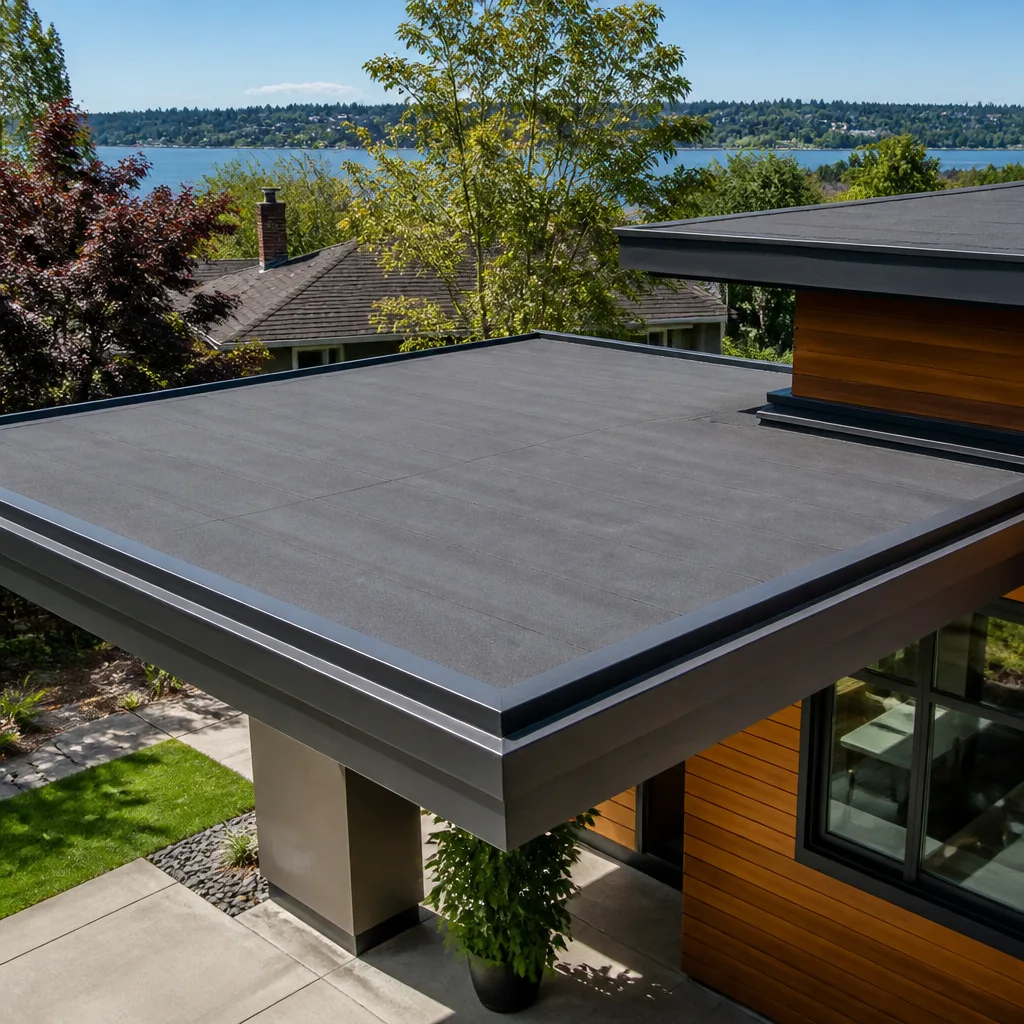 Flat & low-slope
Free roof inspection with deck photos before we talk money - GAF and Owens Corning certified installation
Roofing Warning Signs: A Burbank Homeowner’s Reference Guide
Here’s the thing most roofing guides won’t tell you: by the time a water stain shows up on your Burbank ceiling, the leak has usually been active for two to six weeks. The stain you’re looking at is just where the water finally found a path through your insulation and drywall. The actual entry point on the roof could be ten or fifteen feet away, traveling along a rafter or sheathing seam before it drips somewhere visible. This guide is about reading the earlier signals – the ones that are ambiguous, slow-moving, and easy to rationalize away. Because in Burbank’s climate, with our hot dry summers and the occasional winter downpour, the damage that costs homeowners the most is rarely the dramatic stuff. It’s the quiet stuff that got ignored.
Quick Answer
The most reliable early roofing warning signs in Burbank are: granule accumulation in gutters (indicating shingle wear), attic moisture or condensation patterns that don’t match rainfall timing, curling or blistering shingles on south-facing slopes, and mortar erosion on clay tile ridges. If you’re seeing any of these, schedule a professional inspection before interior damage appears. The repair is always cheaper before water reaches your ceiling.
Styles & brands we work with
Table of Contents
- Interior Warning Signs Most Homeowners Misread
- Exterior Signals Specific to Burbank’s Climate
- Reading Granule Loss: Your Gutter as a Timeline
- Structural Warning Signs That Signal Systemic Problems
- Repair or Replace? A Decision Framework
- Common Mistakes to Avoid
- When to Call a Professional
- Frequently Asked Questions
Interior Warning Signs Most Homeowners Misread
The inside of your Burbank home tells you more about your roof’s health than most people realize. The problem is that interior moisture has several possible sources, and misdiagnosing the cause can send you down an expensive wrong path. Here’s how to distinguish the three most commonly confused sources of attic and ceiling moisture.
Attic Condensation vs. Active Roof Leak
Attic condensation and roof leaks look almost identical at first glance: damp insulation, water staining on rafters, perhaps a few drips onto the ceiling below. But they have completely different fixes. Condensation is a ventilation problem. It happens when warm, moist air from your living space rises into a cold attic and deposits water on the underside of the roof deck. It’s most common in Burbank homes during cool winter nights, especially after a hot shower or a load of laundry. A roof leak, on the other hand, is tied to rainfall events. Here’s a simple test we walk homeowners through over the phone:
- Note the timing. Does the moisture appear within 24 to 48 hours after rain? If yes, it’s more likely a leak. If it appears during dry stretches, especially cold dry nights, it’s more likely condensation.
- Check the pattern. Condensation tends to be widespread – a sheen of moisture across a broad area of the roof deck. Leaks are localized – a concentrated wet spot, often with a visible drip path.
- Look at the ventilation. If you have inadequate attic ventilation (blocked soffit vents are common in Burbank’s older hillside homes), condensation becomes far more likely.
The fix for condensation is installing or repairing ventilation – ridge vents, soffit vents, or an attic fan. The fix for a leak is targeted roof repair at the entry point. Calling a specialist who does both means you don’t pay for a roof patch when what you actually needed was better airflow.
HVAC Condensate vs. Roof Intrusion
This one fools a lot of Burbank homeowners. Your air conditioner produces gallons of condensate during our long cooling season, and if the condensate line gets clogged or the drip pan cracks, water ends up exactly where roof leaks show up: on ceilings, around registers, or staining the drywall near the attic access. Here’s how to tell the difference:
- HVAC condensate appears during hot weather when your AC is running hard. Roof leaks appear during or after rain. If you have a ceiling stain in August and it hasn’t rained in three months, it’s almost certainly not your roof.
- HVAC moisture smells musty but not earthy. Roof leaks that have been active for a while develop a distinct earthy, mildew-rich odor because they carry organic material from the attic.
- Condensate puddles are clean. Roof leak stains are often tannin-brown or yellow-brown from wood resins. Condensate stains are usually cleaner, lighter, and more uniform.
If you’re not certain, the safest move is a professional roof inspection in Burbank that includes an attic check. In our experience, about one in five “roof leaks” we’re called out for turns out to be HVAC-related. Better to spend the diagnostic fee than to patch a roof that was never leaking.
Exterior Signals Specific to Burbank’s Climate
Burbank sits in a particular climate band: hot, dry summers with sustained UV exposure, and short but sometimes intense winter rain events. That combination produces specific failure patterns that you won’t see in a general roofing article written for Seattle or Chicago. Here are the three most Burbank-specific exterior warning signs we see, in order of how often they appear.
Mortar Erosion on Clay Tile Ridges
Clay tile roofs are everywhere in Burbank, especially in the hillside neighborhoods and the pre-1990s ranch homes across the Magnolia Park and Rancho districts. Tile itself is nearly indestructible. What fails is the mortar that caps the ridge and hip lines. Burbank’s UV intensity breaks down the portland cement binder in that mortar over 15 to 25 years. You’ll see it first as fine sandy material accumulating in the gutter below a ridge line. Later, you’ll notice the mortar starting to crumble away in chunks, leaving gaps between ridge tiles. Once water gets under the ridge cap, it follows the underlayment and finds its way to the deck. The fix is usually re-pointing or re-bedding the ridge caps – a repair, not a replacement. But if it’s ignored, the water intrusion can rot the decking under the ridge, and that turns into a much larger job.
Blister Patterns on Torch-Down Flat Roofs
Flat roofs on Burbank additions, garages, and mid-century moderns are typically torch-down modified bitumen. The failure pattern specific to our climate is blistering: bubbles or raised areas where the membrane has lost adhesion to the substrate. Here’s what happens. The dark surface absorbs direct sunlight, which in a Burbank summer can push the roof surface temperature past 160 degrees. Any moisture trapped under the membrane vaporizes and expands, creating a blister. Small blisters (under six inches across) are often stable and can be left alone for years. Large blisters, or blisters near seams or penetrations, are a warning sign that the membrane is losing structural integrity. If you see blistering across more than one-third of a flat roof’s surface, you’re looking at a re-cover or replacement within 2 to 5 years. If it’s isolated, a targeted roof repair in Burbank usually resolves it.
Stucco Cracking at Roof-Wall Junctions
This one gets missed constantly because it looks like a stucco problem, not a roof problem. But cracked stucco where a wall meets the roof line is often the first visible evidence of roof movement or thermal expansion. Burbank’s temperature swings between day and night can exceed 40 degrees in the spring and fall. Roof decking expands and contracts. If the roof-to-wall flashing wasn’t properly installed – or if the house has settled – the movement transfers to the stucco and cracks it. Once that crack opens, water from a hard Burbank winter rain runs straight down the wall and into the building envelope. The crack is the symptom. The cause is usually inadequate flashing at the transition. Fixing the flashing before repatching the stucco is the only sequence that actually solves the problem.
Reading Granule Loss: Your Gutter as a Timeline
Composition shingles (the asphalt shingles made by manufacturers like Owens Corning, Atlas, and Tamko) protect themselves with a layer of ceramic granules. Those granules are the shingle’s sunscreen. They block UV radiation from degrading the asphalt below. And they have a lifespan. As shingles age, they shed granules at an increasing rate – and your gutters are collecting the evidence.
Here’s how to read what’s in your gutters:
- Light, even granule layer (years 1-8 of shingle life): A fine dusting of granules in the gutter after a rain is normal, especially for newly installed roofs. Manufacturing excess sheds in the first year or two.
- Piles forming at downspouts (years 8-15): When you start seeing small piles of granules accumulating at downspout openings or in gutter corners, the shingles are entering their wear phase. The asphalt is beginning to oxidize and lose its grip on the granules.
- Bald patches visible from the ground (years 15-25): When the shingles themselves start showing dark bald spots where granules used to be, the UV protection is gone from those areas. The asphalt is now degrading directly. You have 2 to 4 years of remaining useful life, depending on the shingle line and the slope’s sun exposure.
- Granules plus shingle fragments (end of life): Once you find actual pieces of shingle in the gutter – not just granules – the shingles are brittle and fracturing. Active replacement planning should start now.
The key insight for Burbank homeowners: your south-facing and west-facing slopes will shed granules faster than north-facing slopes. That’s unrelenting San Fernando Valley sun. If you see uneven granule loss between slopes, it’s not a defect. It’s physics. But it does mean you should inspect the exposed slopes first when evaluating remaining life.
Different manufacturers use different granule formulations. IKO shingles, for example, tend to use a slightly larger granule size than Owens Corning products, which affects how the granule loss reads in your gutter. If you know what product was installed, a specialist can tell you whether the loss rate you’re seeing is normal for that line or premature. If you don’t know what’s on your roof, a professional inspection can identify it and give you a realistic remaining-life estimate.
Structural Warning Signs That Signal Systemic Problems
Some warning signs aren’t about the roofing material at all. They’re about the structure underneath. These are the ones that separate a simple repair from a major project – and they’re the ones that get missed most often because nobody looks up in the attic.
Sagging Deck Sections
Roof decking (typically plywood or OSB) should present a flat, continuous plane. From inside your attic, you should be able to sight along the underside of the deck and see no obvious dips or waves. A sagging section means the decking has absorbed moisture and lost its structural rigidity. It will not recover. The fix is replacing the affected decking, which requires removing and reinstalling the roofing material above it. If the sagging is caught early – when it’s a single sheet – the repair is contained. If it’s ignored, water continues to enter and the rot spreads. We regularly see Burbank homes where a single missed flashing failure rotted a four-by-eight foot section of decking into a six-sheet problem over the course of two winters.
Fascia Rot
The fascia is the vertical board that runs along the edge of your roofline and holds your gutters. It’s exposed to direct weather and it’s the first place water from a failing eave or drip edge will show up. Fascia rot looks like: paint peeling in a specific area rather than generally fading, a soft or spongy feel when pressed, visible dark staining, or wood that’s visibly splitting or crumbling. In Burbank, we often see fascia rot on homes where the original gutters were installed with spikes rather than hangers, which creates small cracks in the wood that admit water. The fascia isn’t just cosmetic. It carries the load of the eave and provides the mounting surface for the gutter system. When it starts to fail, everything attached to it starts to move.
Soffit Staining
Your soffit is the underside of the eave overhang. Staining on the soffit – particularly dark, water-marked patches near the outer edge or around vent openings – indicates water is getting where it shouldn’t be. The two most common causes in Burbank are: ice damming (rare, but it happens on our coldest December nights at higher elevations in the Verdugo foothills) and gutter overflow. When gutters clog with debris from Burbank’s many mature trees – liquidambar, sycamore, and oak are the usual culprits – water backs up and runs down the fascia and onto the soffit. Left unaddressed, soffit staining progresses to soffit rot, and then the eave structure itself is compromised. This is also a ventilation issue: damaged soffits often contain vent openings, and when they’re blocked or rotted, your attic ventilation suffers, which accelerates condensation problems.
Repair or Replace? A Decision Framework
This is the question every Burbank homeowner eventually faces. You’ve found a warning sign. Now what? Here’s the decision framework we use when evaluating whether a given problem is a repair situation or a replacement trigger. It’s based on four variables: roof age, damage location, damage extent, and remaining material life.
The Four Variables
- Roof age. If the roof is under 10 years old and was installed well, most isolated problems are repair situations. If the roof is over 20 years old – even if the materials look okay from the ground – your threshold for replacement should be low. Repairs on aging roofs often fail because the surrounding material can’t hold a patch.
- Damage location. Damage at a single penetration (a pipe boot, a vent, a skylight, a chimney) is usually repairable at any roof age. Damage across broad field areas of the roof – widespread granule loss, multiple blisters, shingles curling across entire slopes – suggests the material itself is exhausted.
- Damage extent. A single missing shingle is a repair. Missing shingles across a 20-square foot area, especially if the underlayment is exposed or the decking is soft, is the start of a replacement conversation. Our rule of thumb: if more than 30% of the roof surface shows active deterioration, the economics favor replacement.
- Remaining material life. This is where knowing what’s on your roof matters. A 15-year-old roof with three-tab shingles (typical lifespan 15-20 years) has little remaining life. The same 15-year-old roof with high-end architectural shingles from Owens Corning or Atlas (typical lifespan 25-50 years depending on the line) has plenty of runway left. Matching the repair material to what’s already installed matters too – and that’s easier when your contractor isn’t locked into a single manufacturer.
One advantage of working with a team that has access to multiple manufacturer lines is that repair matching isn’t constrained by what one brand happens to offer. If your roof was installed with a certain tile profile or a specific shingle color from Tamko, we can source the match rather than telling you “we don’t carry that line.” It sounds minor, but a mismatched repair shingle on a visible slope is a permanent eyesore – and it affects resale.
If the framework points toward replacement, the next step is a roof replacement consultation that lays out material options, timeline, and honest budget ranges. If it points toward repair, the work is scheduled and scoped precisely. The point is that you’re making the decision based on evidence, not on a contractor’s incentive to sell the bigger job.
We investigate before we recommend. That’s the whole philosophy.
Common Mistakes to Avoid
- Painting over a ceiling stain without finding the source. The stain will come back, usually bigger, because the water is still getting in. If the stain is from an active leak, you’re now trapping moisture behind paint, which accelerates mold growth. Find the source first, paint second.
- Assuming a new roof means no problems. Most roof failures happen not because materials wore out but because something was installed wrong: flashing, underlayment, penetration boots. A roof that’s five years old and leaking is almost certainly a workmanship or flashing issue, not a material failure. Don’t ignore it just because “the roof is new.”
- Ignoring the attic entirely. Most Burbank homeowners haven’t been in their attic in years. But the attic is where the earliest evidence appears: damp insulation, stained rafters, visible daylight through gaps. A 20-minute attic walkthrough twice a year catches problems before they become interior damage.
- Going with the cheapest quote without comparing scope. This is the classic Burbank homeowner trap. One bid is $4,000 and another is $2,300 for “the same roof repair.” They’re never the same. The cheaper bid is cutting something: underlayment type, flashing detail, decking replacement, material quality. Get line-item quotes and compare what’s actually being included.
- Waiting until a leak is active to call. Contractors are busiest during and immediately after Burbank’s winter rain events. If you wait for an active leak, you’ll wait longer for service and pay more. Addressing warning signs during the dry season gets you faster scheduling, better pricing, and a repair that’s completed before it ever rains again.
- Rationalizing away small problems. A small blister, a couple of cracked tiles, a little granule pile in the gutter – none of these feels urgent. But each one is the entry point for the next winter’s rainwater. Water doesn’t need a big opening. A pinhole is enough.
- Assuming tile roofs never need maintenance. The tile itself will outlive you. The underlayment underneath it won’t. Burbank tile roofs need underlayment replacement roughly every 25 to 35 years, and the ridge mortar needs periodic re-pointing. A tile roof isn’t maintenance-free; it’s just maintenance deferred.
When to Call a Professional
Some situations are obvious: water is actively dripping into your living room, a tree limb has punctured the roof, or a section of shingles has blown off. But most of the scenarios in this guide are more ambiguous. The general rule is this: if you’ve noticed any of the warning signs described above and you’re not certain what they mean, the cost of a professional diagnostic is always less than the cost of waiting. A thorough roof inspection in Burbank takes an hour or two and gives you an evidence-based picture of what you’re dealing with. If you’re seeing any of the structural signs – sagging deck, fascia rot, soffit staining – don’t attempt to assess that yourself from the ground. Those need eyes in the attic and on the roof surface.
Marquis Roof Repair offers free estimates in Burbank – call (866) 705-2978 to schedule yours. If the problem turns out to be minor, we’ll tell you. If it turns out to be significant, you’ll know exactly what you’re facing and what it will cost to fix, before any work is authorized.
Frequently Asked Questions
The earliest leak indicators are in the attic, not on the ceiling: damp insulation, water marks on rafters, or a musty smell in the attic space that intensifies after rain. Check your attic within 48 hours after a Burbank rain event. If anything feels damp or looks stained, you have a leak that hasn’t reached the interior finishes yet.
Minor repairs (a few shingles, a small flashing patch, a pipe boot replacement) typically run $250 to $650. Moderate repairs involving decking replacement or multiple flashing points run $800 to $2,500. Larger repair scopes that involve structural work can exceed $5,000. These are ranges, not quotes – the only way to get an accurate number is an inspection. Call (866) 705-2978 for a free estimate.
Entry-level three-tab shingles typically last 15 to 18 years in the San Fernando Valley’s UV intensity. Mid-grade architectural shingles from manufacturers like OWENS CORNING, ATLAS, and TAMKO typically last 25 to 40 years depending on the specific line, installation quality, and attic ventilation. Premium lines can push toward 50 years. South-facing slopes in Burbank will age faster than north-facing slopes due to sun exposure.
You can and should do regular visual checks from the ground – looking for missing shingles, obvious sagging, granule accumulation in gutters, and visible damage around penetrations. What you can’t safely do from the ground is assess flashing details, underlayment condition, decking integrity, and attic ventilation performance. Those require training and, in most cases, getting on the roof itself. Steep-slope and tile roof work is genuinely dangerous; leave the on-roof inspection to a professional.
Insurance typically covers sudden, accidental damage: wind that tears shingles off, a tree falling on the roof, hail impact. It does not cover maintenance-related failures: granule loss, age-related wear, flashing deterioration, or leaks from long-term neglect. If your roof is over 20 years old, some Burbank insurers are requiring proof of replacement before renewing policies. Check your specific policy language; coverage varies significantly by carrier and by the age of the roof.
For most Burbank homes, every two to three years is appropriate. For homes with tile roofs over 20 years old, flat roofs of any age, or roofs surrounded by heavy tree cover, annual inspections make sense. After any significant weather event – especially the winter rain storms that roll through the Valley – a quick professional check is the cheapest insurance you can buy against a five-figure repair.
The Bottom Line
The roof over your Burbank home is degrading a little every day, whether you’re watching or not. The question isn’t whether it will eventually need work. The question is whether you catch the warning signs early enough to make the work small, contained, and affordable – or whether you wait until the evidence shows up on your ceiling. Read your gutters for granule loss. Walk your attic after rain. Check your flat roof for blisters in the spring. Watch your tile ridges for crumbling mortar. And if you see something you’re not sure about, get a professional opinion before it becomes a professional-sized problem. From first inspection to final shingle, the goal is the same: a roof built and maintained to the Marquis standard, protecting the home you’ve invested in.
Written by the team at Marquis Roof Repair, serving Burbank since 2014.
See the difference
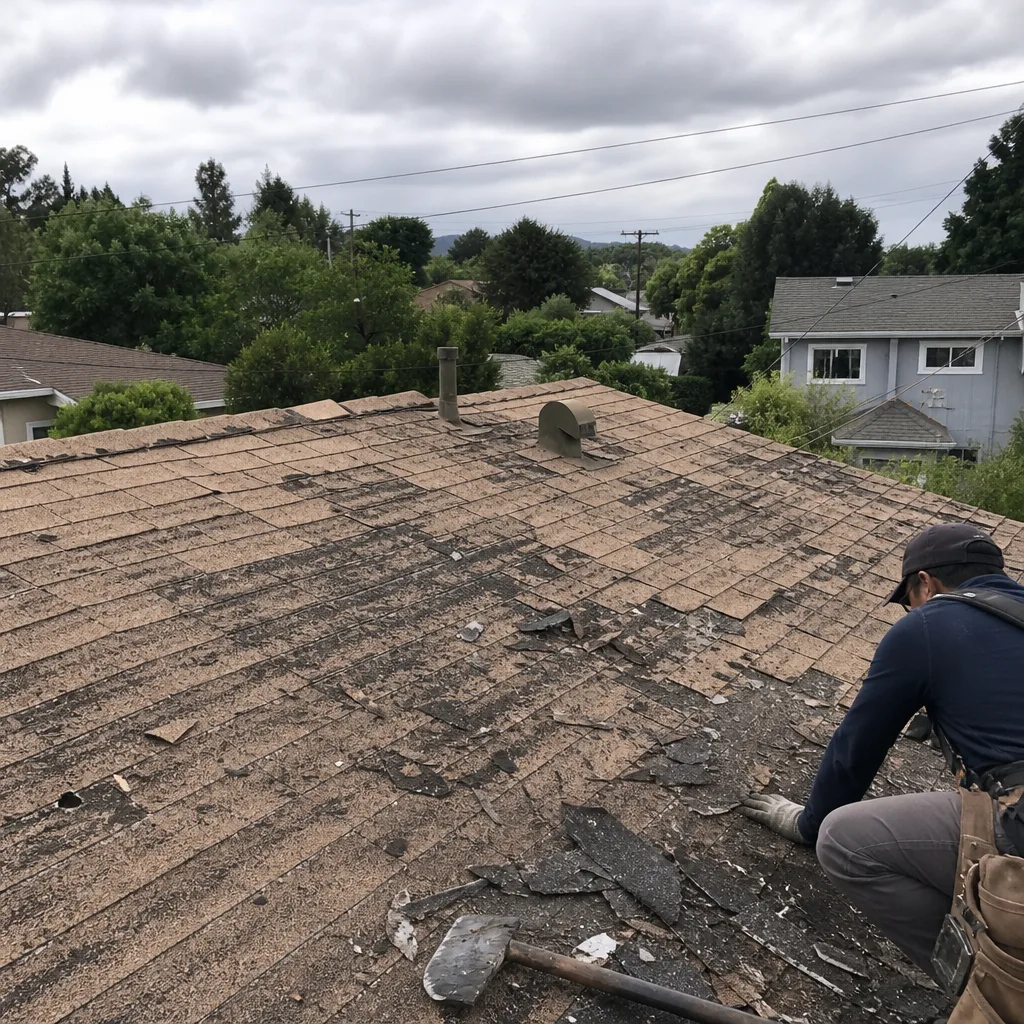 Before
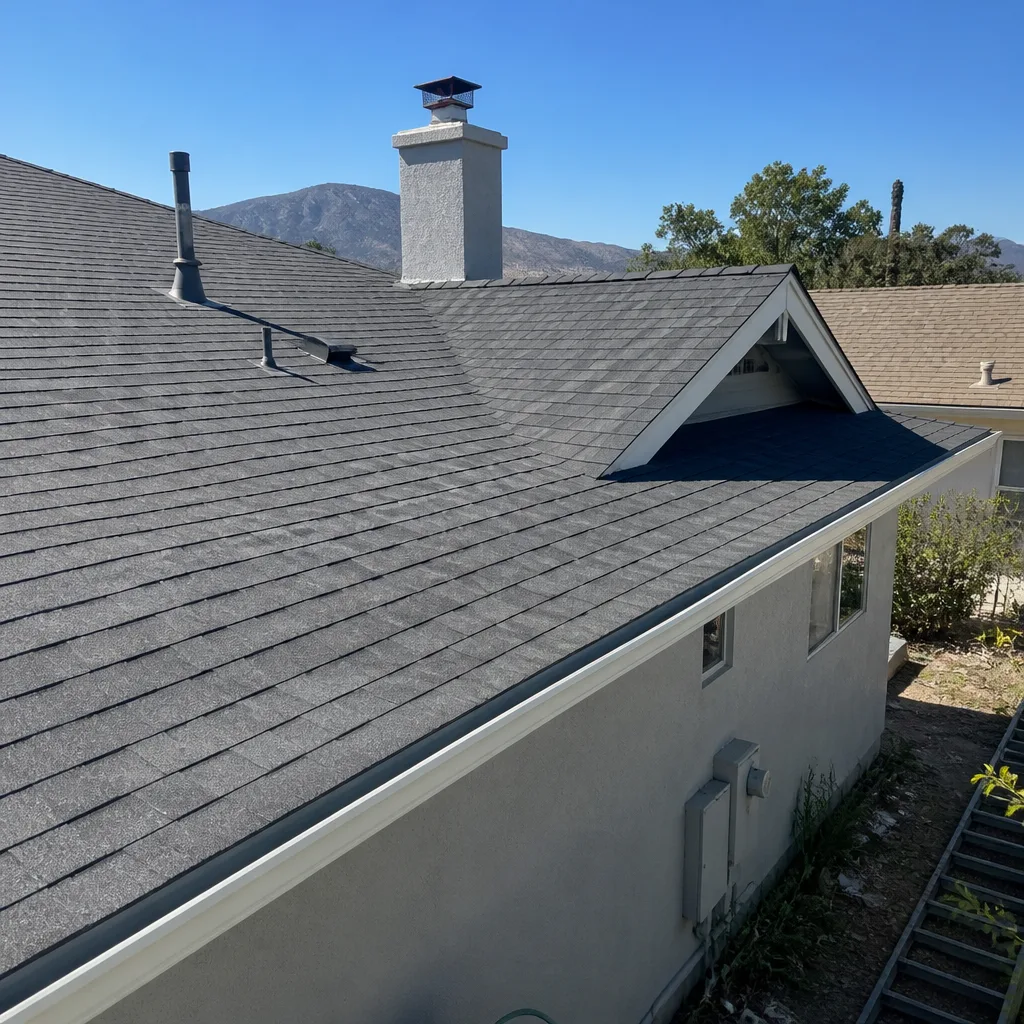 After
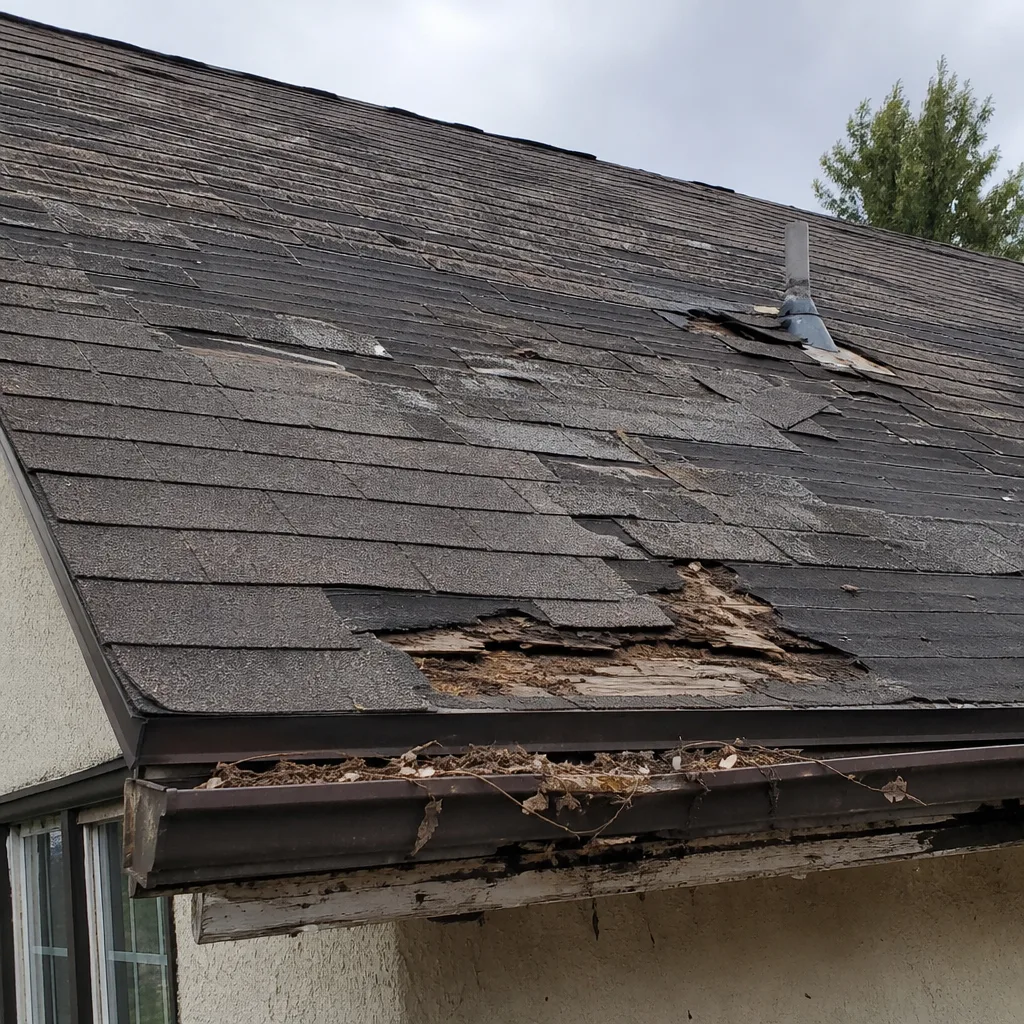 Before
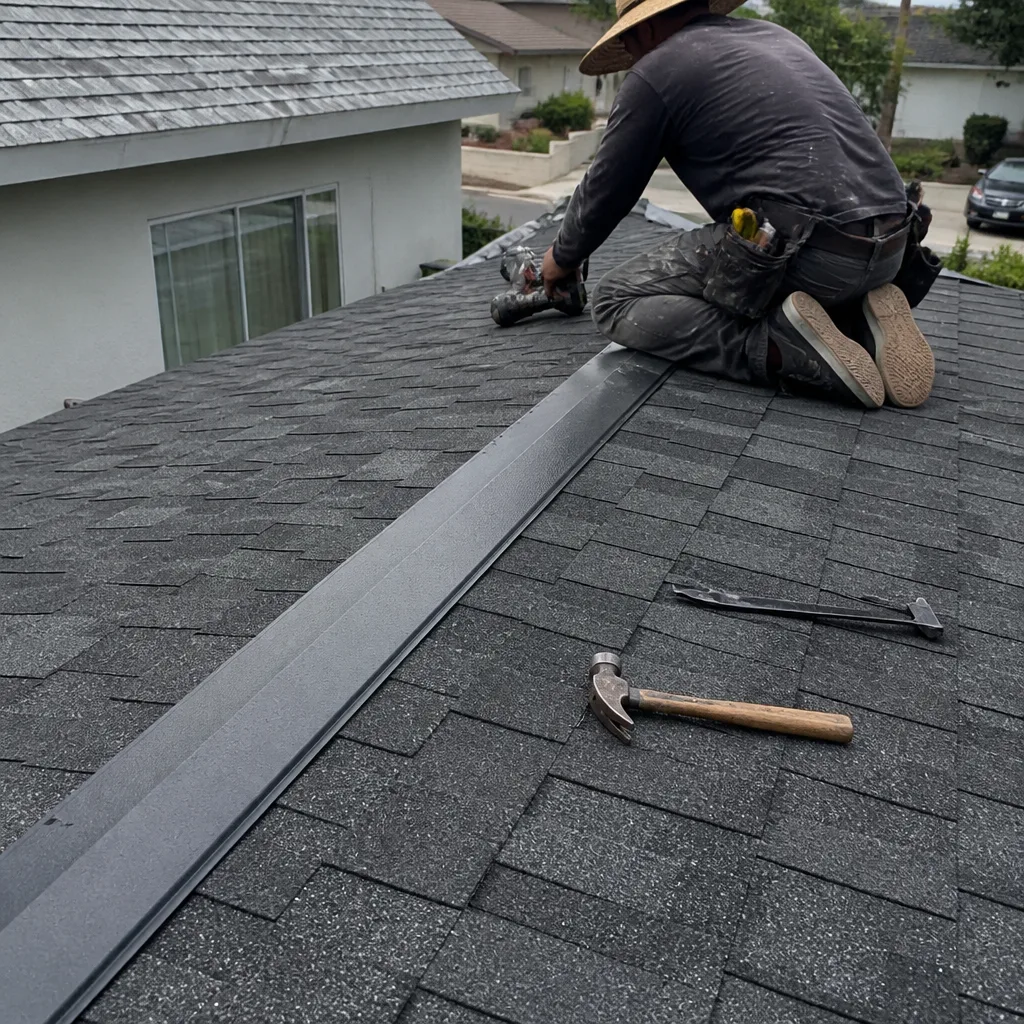 After
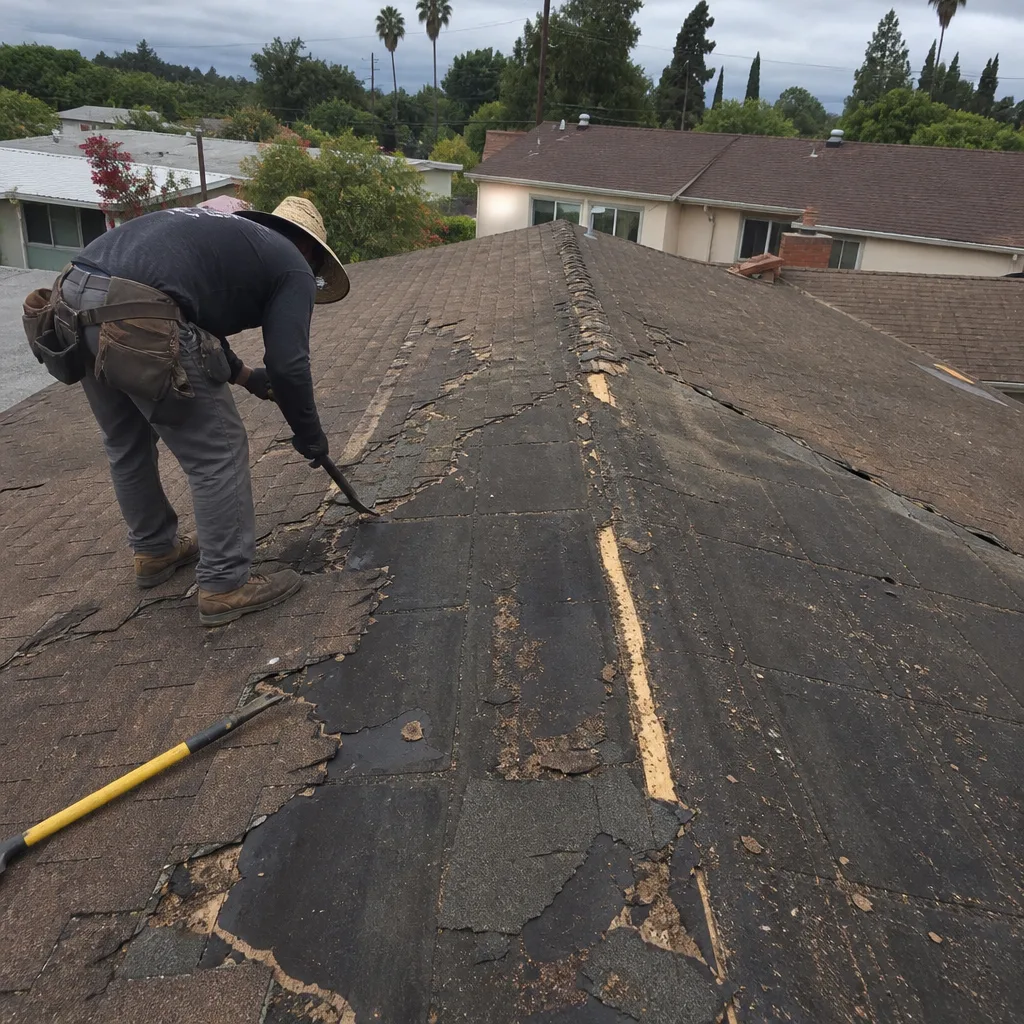 Before
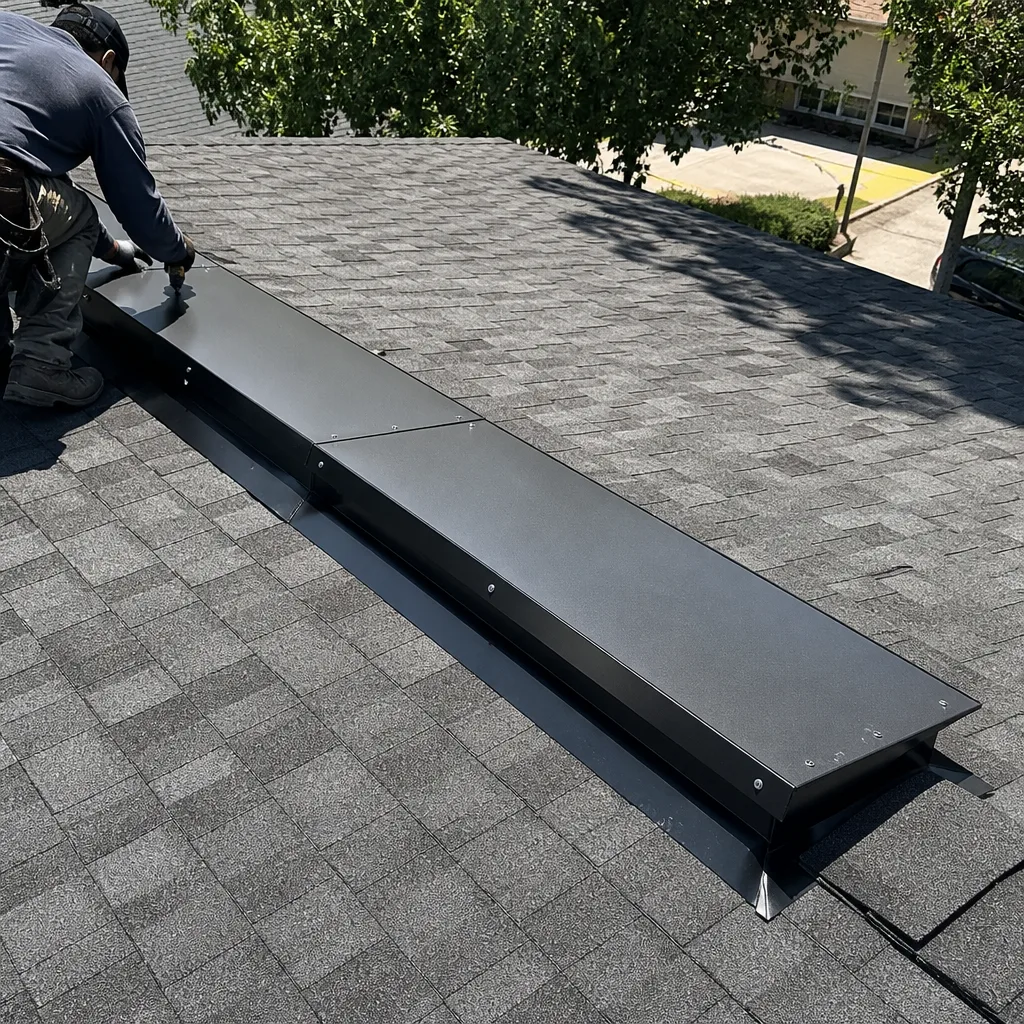 After